
Case Studies
Improving Spleeft’s Barbell Velocity Algorithm with Real Data
How I used Apple Watch data, a linear encoder and recordings from Paris to improve Spleeft’s rest detection, repetition segmentation and bar velocity tracking.


How I used Apple Watch data, a linear encoder and recordings from Paris to improve Spleeft’s rest detection, repetition segmentation and bar velocity tracking.

Traditionally, strength-training programming has been based on three key variables: sets, repetitions, and loads (for example, a % of 1RM or a fixed number of
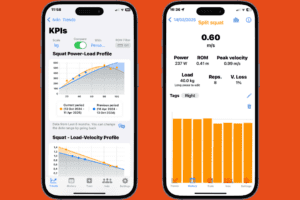
Strength training measuring execution velocity is here to stay. Measuring velocity or jump height improves the quality of your services; it allows you to optimize

In this article, I share — from a technical and reflective perspective — the learning and development process behind the latest optimization of the Spleeft

Have you ever wanted to improve your performance in the gym more efficiently? Today we show you practically how we apply velocity based training in
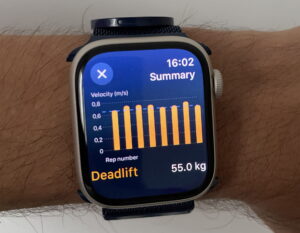
One of the best things about resistance training is that every workout is a testing session. Why? If you want to improve your strength, you

Maximizing results in strength training requires more than just lifting heavy weights; it’s about understanding the specific mechanics of concentric vs eccentric contraction. These two

How Do I Improve My Vertical Jump? This is one of the most common and sought-after questions among athletes across various sports. Whether you play

In performance training, understanding the relationship between force, velocity, and power is key to maximizing athletic potential. These relationships are often represented through the force-velocity

Understanding your One Rep Max (1RM) is crucial for effective strength training. Whether you’re a beginner looking to measure progress or an experienced lifter wanting

In the world of sports and fitness, plyometric training stands out as a powerful method for developing explosive strength, enhancing athleticism, and achieving a higher

Strength and power are essential components of athletic performance, and cluster sets have emerged as an effective strategy to enhance both. Unlike traditional set structures,


