2026 年哪款可穿戴设备最精确?Apple Watch、Oura、WHOOP、Garmin

2026 年最佳可穿戴设备 Apple Watch、Oura、WHOOP、Garmin

If you coach in 2026, you’re basically living inside a wearable marketing war.

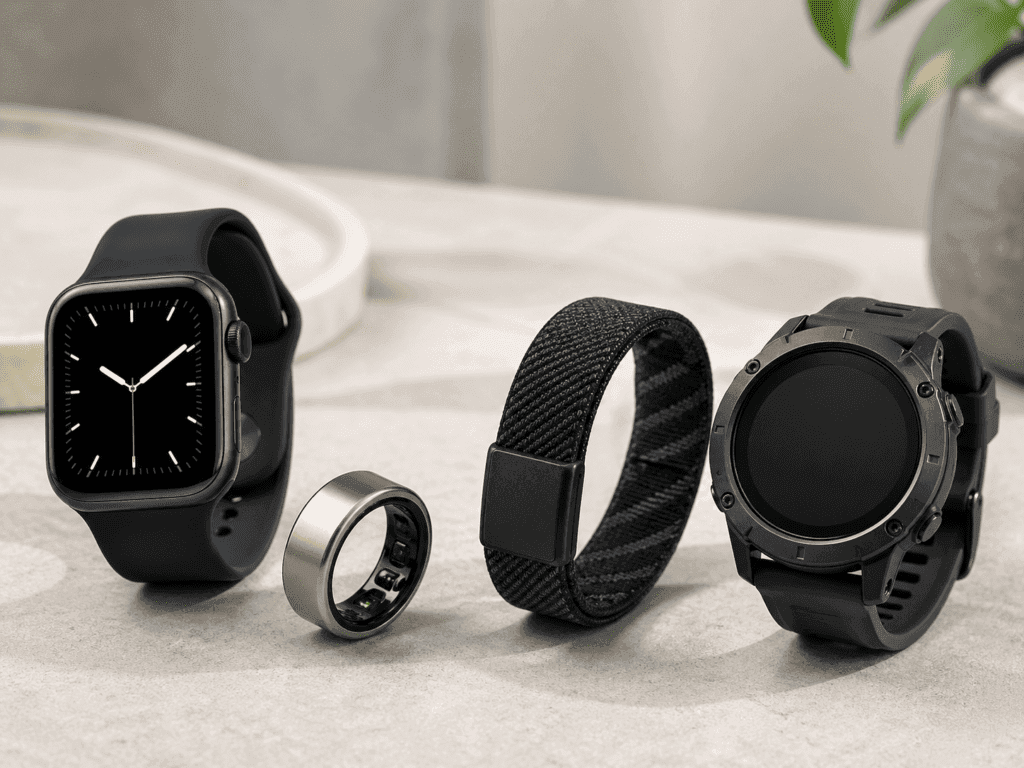
Apple Watch promises health, ECG, and VO₂, WHOOP promises strain and recovery, Oura promises deep sleep and readiness, Garmin promises endurance metrics down to the last meter. All of them claim to be “accurate”—but almost nobody reads the actual validation studies behind those claims.

For Spleeft users, this matters a lot. You’re already tracking bar 速度, jump outputs, and training loads. If the wearable data you plug into that ecosystem (心率, HRV, sleep, VO₂ estimates) is wildly off, your beautifully calibrated velocity-based plan is built on sand.

So let’s do what that Reddit post did—but in coach language, with real literature, and with a clear answer to the question: which wearable makes the most sense to pair with Spleeft App, for which metric?

立即下载适用于 iOS、Android 和 Apple Watch 的 SPLEEFT 应用程序!

What “accuracy” really means for wearables

Before crowning a “most accurate” wearable, we need to ask accurate for what?

Different metrics have different gold standards:

  • Sleep stages → polysomnography (PSG) with EEG

  • Heart rate and HRV → ECG chest strap or multi‑lead ECG

  • VO₂ max → lab gas-exchange 最大 VO₂ 测试

  • Steps → manual counting or video + force plates

  • SpO₂ → medical‑grade pulse oximeter

Most validation papers compare a wearable to one of those references and report:

  • Bias (does it systematically over‑ or underestimate?)

  • Error (MAPE, MAE, RMSE)

  • Agreement (Cohen’s κ for sleep, concordance correlation for HR/HRV)

So when you see rankings like “Apple Watch 86% for active heart rate” or “Oura Gen 4 MAPE 5.96% for nocturnal HRV,” that’s what they’re doing: comparing to a gold standard in a specific context.

Key idea: no single device wins everything. The smart move is to pick your wearable based on the metric you care about most, then integrate that metric intelligently with Spleeft’s 速度 and training data.

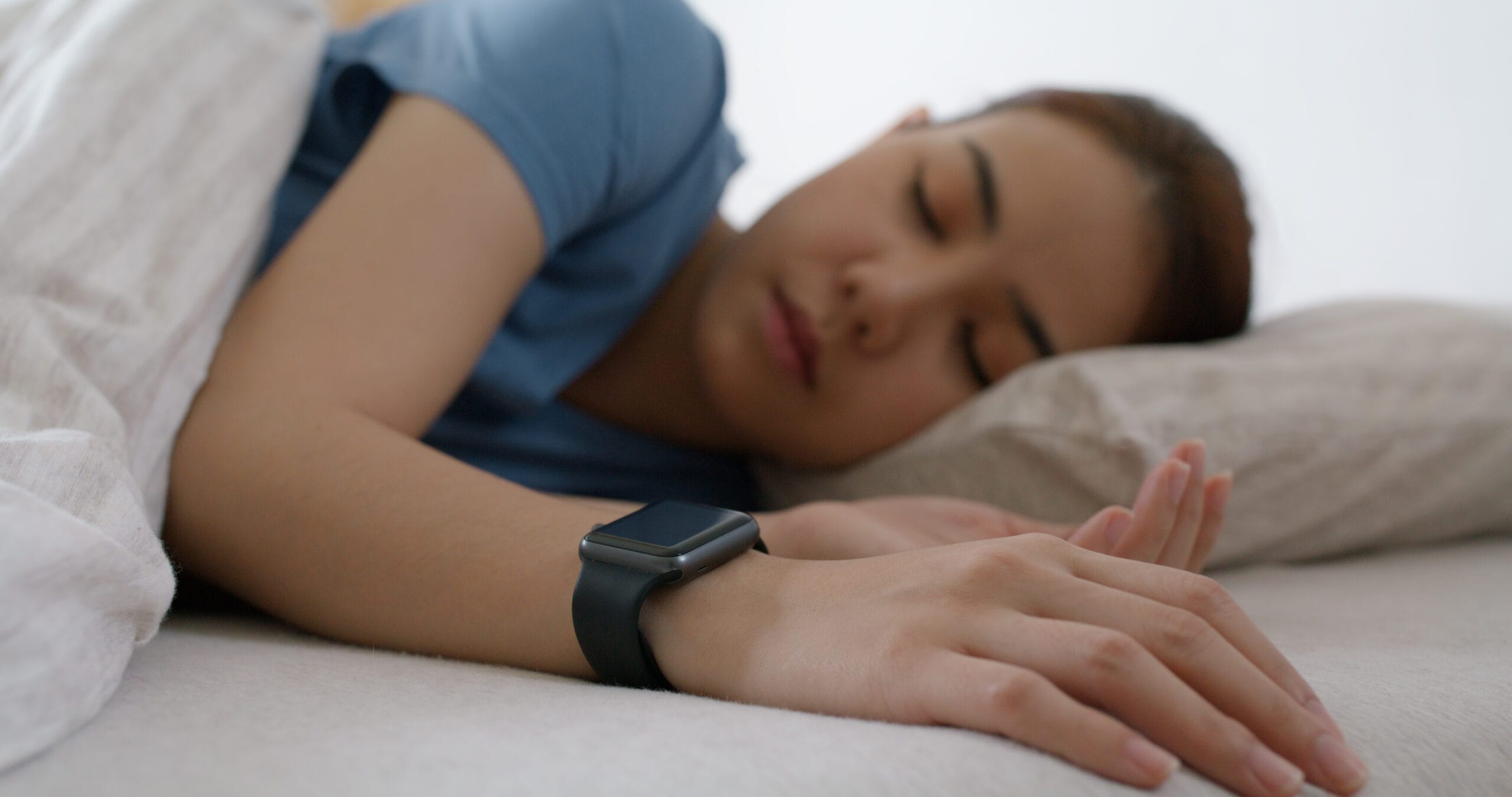
A 2025 validation at the University of Antwerp tested six popular wearables (Apple Watch Series 8, Fitbit Sense, Fitbit Charge 5, WHOOP 4.0, Withings, Garmin Vivosmart 4) against one night of in‑lab PSG in 62 adults.¹

Headline findings:

  • All devices detected >90% of sleep epochs correctly (good at sleep vs wake).

  • Specificity for wake was much lower (roughly 29–52%).

  • Cohen’s κ for 4‑stage sleep (wake, light, deep, REM) ranged from 0.21 to 0.53, meaning fair to moderate agreement.¹

In that independent study:

  • Apple Watch Series 8 had κ≈0.53 (highest of the bunch) with decent REM detection but still underestimated wake and deep sleep.¹

  • Fitbit Sense and Charge 5 were moderate (κ≈0.41–0.42).

  • WHOOP, Withings, and Garmin sat in the “fair” range (κ≈0.21–0.37).¹

Another lab study comparing six devices (Apple Watch S6, Garmin, Polar, Oura Gen 2, WHOOP 3.0, Somfit) found similar themes: good at total sleep time, weaker at staging, with Oura and WHOOP slightly ahead on multi‑stage classification (κ≈0.43–0.52 vs Apple’s κ≈0.20).²

What this means for you:

  • 对于 broad sleep trends (time in bed, total sleep time, rough architecture), Apple Watch, Oura, and WHOOP are all serviceable.¹²

  • 对于 precise stage counts (“you had 54 minutes of deep sleep”), none are clinical‑grade, but Oura and WHOOP tend to hold up slightly better in multi‑stage classification; Apple often does well on wake detection.¹²

From a Spleeft perspective, you don’t need perfect staging—you need a reliable trend signal to pair with your 速度 and training‑load data:

  • Night‑to‑night changes in total sleep time

  • Big drops in efficiency or big spikes in wake after sleep onset

  • Shifts in REM/”deep” proportions over weeks

Apple Watch, Oura, and WHOOP can all do this reasonably well; Oura and WHOOP are slightly more oriented toward long‑term recovery narratives, while Apple integrates more tightly with the broader Apple ecosystem.

2026 年最佳可穿戴设备 Apple Watch、Oura、WHOOP、Garmin

Nocturnal HR and HRV: Oura and WHOOP lead, Garmin lags

HRV is where the gap between devices really starts to matter for training.

A 2025 study compared nocturnal resting heart rate (RHR) and HRV from Oura Gen 3 & 4, WHOOP 4.0, Garmin Fenix 6, and Polar Grit X Pro against a Polar H10 ECG chest strap over 536 nights in 13 participants.³

Results for nocturnal HRV:

  • Oura Gen 4: CCC ~0.99, MAPE ≈ 6% → highest agreement

  • Oura Gen 3: CCC ~0.97, MAPE ≈ 7% → substantial

  • WHOOP 4.0: CCC ~0.94, MAPE ≈ 8% → moderate

  • Garmin Fenix 6: CCC ~0.87, MAPE ≈ 10.5% → poor

  • Polar Grit X Pro: CCC ~0.82, MAPE ≈ 16% → poor³

Takeaways:

  • 对于 nocturnal HRV and RHR, Oura Gen 3/4 are currently the most accurate consumer options, with WHOOP a close, acceptable second.³

  • Garmin and Polar trail behind in this particular study (and this was on older Fenix hardware).³

If you want to use HRV‑based readiness  Spleeft:

  • Pair Oura or WHOOP for nocturnal HRV trends

  • Combine their readiness/HRV curves with your Spleeft 速度 data (jump 速度, bar 速度, sprint 速度) to build a much richer readiness model

Spleeft gives you how they’re actually moving under load. The wearable gives you how their system recovered overnight. That combo is far more robust than leaning on HRV alone.

Active heart rate and VO₂ max: Apple/Polar for HR, Garmin for VO₂

For heart rate during exercise:

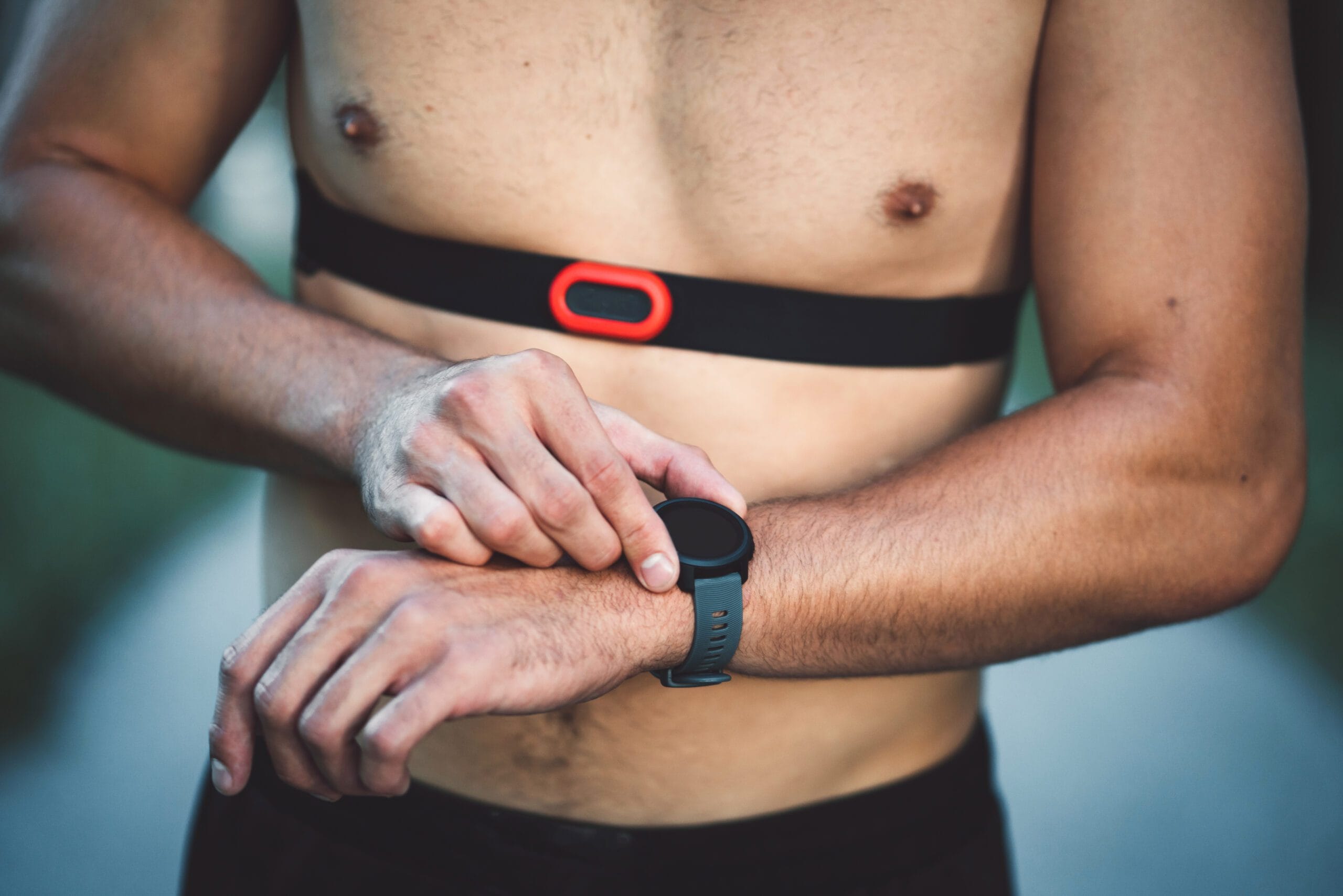
  • Meta‑analysis data tend to show 苹果手表 near the top for active HR accuracy (~mid‑80% agreement), with Fitbit and Garmin in the 70s and high 60s.⁴

  • Chest straps (Polar H10, etc.) are still the gold standard (correlation r≈0.99 vs ECG), with Apple Watch around r≈0.80 and some Garmin models around r≈0.5–0.6 in more challenging conditions.⁴

So if you care about in‑session HR data to structure intervals alongside 速度 (e.g., Spleeft‑tracked running 速度 plus HR zones):

  • Apple Watch + chest strap (for the hardest sessions) is still a very strong combo.²⁴

For VO₂ max estimates, a 2024–2025 set of validations is instructive:

  • Garmin Forerunner 245 and Fenix 6 show VO₂ max estimation errors around 5.7–7.0% vs lab values in runners, which is pretty solid for field use.⁵

  • Apple Watch Series 7 underestimates VO₂ max with mean absolute errors around 6–7 ml/kg/min and MAPE in the low‑ to mid‑teens (13–16%).⁵

几乎:

  • 对于 VO₂ max / maximal aerobic velocity estimates, Garmin is currently ahead. Apple Watch can still track trends, but the absolute value may be off, especially in very fit or very unfit populations.⁵

In a Spleeft context:

  • If you’re building VO₂ or aerobic velocity‑based running sessions and you want a watch to set paces, Garmin’s VO₂ module + Spleeft’s 速度 feedback is a strong pairing.

  • If you’re using Spleeft mostly for strength and power, Apple Watch HR + Spleeft bar 速度 is often more than enough.

2026 年最佳可穿戴设备 Apple Watch、Oura、WHOOP、Garmin

Steps and calories: good enough for steps, weak for calories

On step counts:

  • Several large comparisons show Garmin and Apple Watch clustering around 80–83% accuracy vs manual counts, with Fitbit slightly lower and ring‑style devices like Oura struggling more—especially in free‑living settings.⁴

For energy expenditure:

  • All consumer devices are mediocre. Apple Watch often “wins” with ~70% accuracy in structured protocols, Fitbit lands mid‑60s, and others perform worse.⁴

  • Error grows during high‑intensity, multi‑modal, or resistance‑based sessions—exactly what you care about with Spleeft and velocity‑based lifting.⁴

Rule of thumb:

  • Use steps as a rough volume proxy (non‑training activity, general load).

  • Treat calories as a very fuzzy estimate; never build nutrition or performance decisions on those numbers alone.

Putting it together: “best wearable” by primary metric

If we summarize independent and semi‑independent research to date, a pragmatic ranking by primary metric looks like this (focusing on Apple Watch, Oura, WHOOP, Garmin):

  • Sleep architecture (multi‑stage) & nocturnal HRV →

    • Oura Ring Gen 3/4 and WHOOP perform strongly, with Oura slightly ahead for HRV accuracy and reasonably strong staging; Apple Watch 8 also performs well on staging, especially in Antwerp’s independent validation.¹³

  • Active heart rate & everyday usability →

    • Apple Watch consistently lands near the top for in‑session HR accuracy, while integrating extremely well into daily life.²⁴

  • VO₂ max estimation for runners →

    • Garmin Forerunner/Fenix families currently lead, with lower VO₂ estimation error and closer alignment to lab values.⁵

  • Long‑term recovery and readiness narratives →

    • WHOOP and Oura focus heavily on strain/recovery/HRV framing; Apple and Garmin are catching up but are still more generalist.³

The honest answer: the best wearable to pair with Spleeft depends on which data you actually plan to use in your coaching decisions.

How to pair wearables with Spleeft App in the real world

Here’s how I’d think about it as a Spleeft coach.

Scenario 1: Strength & power athlete (velocity-first)

Your priority: bar 速度, jump 速度, readiness for high‑intensity lifting.

  • Wearable target:

    • Apple Watch (for HR, ecosystem) or Oura/WHOOP (for nocturnal HRV and sleep trends).

  • Spleeft use:

    • Daily bar/jump 速度 → see if outputs match expected zones.

    • Use wearable only as a context layer: “HRV tanked and bar 速度 dropped? Possibly pull volume.”

You don’t need perfect VO₂ or steps; you need consistent 速度 plus a clean readiness signal.

Scenario 2: Field sport squad (readiness + running + gym)

Your priority: blend velocity‑based lifting, sprint 速度, and readiness from sleep/HRV.

  • Wearable target:

    • Oura or WHOOP for HRV + sleep; or Apple Watch if you want stronger on‑wrist ecosystem and good HR data.³

  • Spleeft use:

    • Track jump and bar 速度 pre‑ and in‑session.

    • Compare to overnight HRV/sleep to understand who is under‑recovering.

    • Adjust load or 速度 targets (e.g., lower loads at same 速度 zone) on days where both wearable and Spleeft data show reduced readiness.

Scenario 3: Endurance athlete (VO₂, thresholds, long‑term trends)

Your priority: VO₂, pace/velocity precision, and long‑term aerobic development.

  • Wearable target:

    • Garmin (Forerunner/Fenix) for VO₂ and running 速度 metrics; optionally Oura for HRV if they want ring‑based readiness.⁵

  • Spleeft use:

    • Use Garmin’s VO₂ estimates to set initial aerobic 速度 zones.

    • Use Spleeft to track running 速度 in key intervals and to keep lifting in the right 速度 band so that strength work supports, rather than fights, endurance.

Important caveats before you marry a wearable

A few reality checks, echoing what the better reviews and meta‑analyses emphasize:¹²³⁴

  • No device wins everything. You pick based on primary use: sleep + HRV vs daily usability vs VO₂ vs sport features.

  • Funding bias is real. Some sleep studies are manufacturer‑funded (e.g., Oura) and rank their device highest; independent work sometimes reshuffles the deck. Read the funding statement.

  • Hardware generations matter. Many papers still test Fenix 6, Watch S6, WHOOP 3.0, etc. Fenix 8 or Watch Series 10 may behave differently.

  • Sample sizes are often small. That HRV study? 13 participants, though 536 nights of data.³ Great depth, limited breadth.

  • Skin tone, tattoos, BMI, and strap fit all affect accuracy. Most validation cohorts are still skewed lighter‑skinned and relatively lean—this is a known gap.⁴

  • PSG and lab tests aren’t perfect either. Inter‑scorer reliability for sleep staging is κ≈0.7–0.8 even among human experts. Devices are compared against an imperfect gold standard.

The job of Spleeft and your coaching isn’t to pretend a wearable is a clinic. It’s to use imperfect but useful data together with precise 速度 and performance metrics to make better‑than‑yesterday decisions.

常见问题

1. Should I use multiple wearables at once (e.g., Oura + Apple Watch + WHOOP)?

You , but you’ll mostly see the limits of multi‑device agreement. For sanity, pick one primary sleep/HRV source 和 one training watch if needed. Then anchor everything in Spleeft via 速度 and performance: whichever wearable you choose, treat it as “one lens” on the athlete, not the final verdict.

2. How often should I re‑evaluate whether my wearable is still accurate?

Any time there’s a major hardware or firmware update. Accuracy can change with new algorithms. Check whether new validation studies exist for your device generation once or twice a year, especially if you’re making high‑stakes decisions based on HRV or VO₂ estimates.

3. Are ring devices (like Oura) worse for training than wrist wearables?

They’re usually better for nocturnal HRV and comfort, but worse for in‑session HR and steps, because hands move differently than wrists and rings aren’t ideal for high‑impact work.³ If Spleeft is your main training environment, a ring + watch combo can work great: ring for recovery, watch for in‑session 速度/HR.

4. Can I trust watch VO₂ max to build serious interval sessions?

You can trust it as a starting point and especially as a trend indicator, but not as a replacement for a proper VO₂ Max Test in high‑performance contexts. Garmin tends to be closer to lab values; Apple Watch is usable but more error‑prone.⁵ Use Spleeft’s 速度 tracking in key intervals to refine those zones based on actual performance.

5. What’s the simplest way to combine a wearable with Spleeft for better decisions?

Start with one readiness metric and one performance metric:

  • Readiness: nocturnal HRV/sleep score from Oura/WHOOP/Apple

  • Performance: jump or bar 速度 check in Spleeft at the start of key sessions

If both are down, that’s a strong case to adjust load or 速度 zones that day. If only one is off, dig deeper (travel, life stress, local muscle fatigue). Over time, you can layer in VO₂, step volume, or more advanced metrics—but even this basic combo is a big upgrade over going by feel alone.

伊万-德卢卡斯-罗热罗

伊万·德·卢卡斯·罗杰罗

MSC 身体表现 & SpleeftApp 首席执行官

致力于提高运动表现和骑行训练,结合科学技术来推动成果。

参考

  1. Schyvens AM et al. “A performance validation of six commercial wrist-worn wearable sleep-tracking devices for sleep stage scoring compared to polysomnography.” Sleep Advances. 2025.

  2. Miller DJ et al. “A Validation of Six Wearable Devices for Estimating Sleep, Heart Rate and Heart Rate Variability in Healthy Adults.” Sensors. 2022.

  3. Dial MB et al. “Validation of nocturnal resting heart rate and heart rate variability in consumer wearables.” Physiol Rep. 2025.

  4. Vora & similar summaries compiling step, HR, and sleep accuracy across Apple Watch, Oura, WHOOP, Garmin, and Fitbit from multiple validation studies.

  5. Apple Watch and Garmin VO₂ max validation work: Lambe RF et al., Caserman P et al., and related trials comparing watch estimates vs lab VO₂ Max Test.

  6. General reviews on consumer wearables for cardiovascular monitoring and clinical decision support.

分享此帖:

发表评论

您的电子邮箱地址不会被公开。 必填项已用 * 标注

您也可能感兴趣

vbt 指南
教程

与在线教练Spleeft一起开始Velocity培训

0.对于那些不熟悉基于速度的训练的人来说,基于速度的训练(VBT)包括监测重复动作的执行速度,以达到最大的目的。

zh_CN