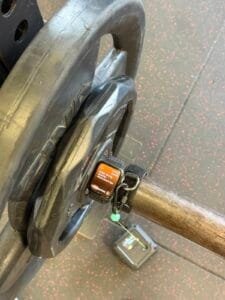

Every coach knows this athlete.
Athlete A looks smooth in warm‑up, can run all day, barely breathing, but when it’s time for a brutal 10 m burst or a loaded jump, they look… fine. Athlete B, meanwhile, looks like a superhero for three reps and then disappears from the session, drowning in lactate.
You’ve just met two different ends of the slow twitch vs fast twitch spectrum in real life.
The goal of this article isn’t to give you a textbook you’ve already skimmed a hundred times about slow twitch muscle fibers 和 fast twitch fibers. It’s to translate that physiology into something you can actually coach, using 速度 和 Spleeft 应用程序 to steer how you develop each type of twitch muscles without guessing.
立即下载适用于 iOS、Android 和 Apple Watch 的 SPLEEFT 应用程序!
The basics: what slow twitch muscle fibers actually are
When we talk about slow twitch muscle fibers, we’re mostly talking about Type I fibers. They contract more slowly, generate lower peak force, but are highly resistant to fatigue.¹
Key characteristics of slow twitch muscle fibers:¹²
High mitochondrial density and oxidative enzymes
Rich in myoglobin and capillaries (dark, “red” fibers)
Prefer aerobic metabolism
Great at holding submaximal 速度 for a long time
Lower peak power and contraction velocity compared to fast types
Functionally, slow twitch muscle fibers are the engine behind endurance: jogging, steady changes of direction, posture, long sets with short rests. They’re the fibers that keep producing useful work when everyone else’s legs feel like concrete.
From a coach’s point of view, the meaning of slow twitch vs fast twitch is simple here: slow twitch keeps you in the game when the clock runs long.

Fast twitch fibers and type IIA muscle fibers: where power lives
On the other side we have fast twitch fibers, or Type II fibers. They contract quickly, produce high force and power, and fatigue quickly.¹³
Within fast twitch fibers, you have:
Type IIx (or IIb in some literature): very fast, very powerful, very fatigue‑prone
Type IIA muscle fibers: fast, but more fatigue‑resistant, a kind of “hybrid” between pure endurance and pure explosive output¹²
Core traits of fast twitch fibers in general:¹²
High contraction velocity
High maximal force and power
Lower fatigue resistance than slow twitch
Greater reliance on anaerobic metabolism
Larger motor neurons and fiber diameters
And type IIA muscle fibers specifically:¹²
Contract faster than slow twitch but slower than IIx
Can use both aerobic and anaerobic pathways
Moderate fatigue resistance
Ideal for repeated high‑intensity efforts (400 m runs, long sprints, repeated jumps)
When athletes talk about “quick twitch muscles,” they’re usually pointing at these fast twitch fibers—especially the IIx end of the spectrum that makes loaded jumps, heavy singles, and violent change‑of‑direction drills look effortless.¹
The big takeaway for coaching: you don’t have one generic “fast” fiber. You have fast twitch fibers with different levels of endurance, and type IIA muscle fibers are the sweet spot you can actually train to support both power and repeatability.
Slow twitch vs fast twitch: what really changes in performance and recovery
So what does slow twitch vs fast twitch look like on the field or in the gym?
A neat applied study looked at athletes with predominantly fast typology vs slow typology using a Wingate protocol (three 30‑second all‑out bouts). The fast‑typology group showed a bigger power drop (about −61%) and took far longer to recover torque compared to the slow‑typology group (−41% power drop, full recovery by 20 minutes).⁴
That’s your classic “quick off the line, dead by rep 5” athlete.
Put simply:
Fast‑dominant athletes produce more power early, but accumulate fatigue and need longer recovery.⁴
Slow‑dominant athletes produce less peak power, but maintain more of it across sets and recover much faster.⁴
For programming, slow twitch vs fast twitch determines:
How much volume they can handle at a given 速度
How often you can hit truly maximal intent sessions
How aggressively you can use repeated high‑intensity work
And this is where Spleeft starts to matter a lot more than fiber‑type trivia charts.
Quick twitch muscles, recruitment, and why intent + velocity matter
When you cue an athlete to move with maximal intent, you’re not just being motivational. As load and intent increase, the nervous system recruits more and larger motor units, pulling in more fast twitch fibers 和 type IIA muscle fibers.⁵
Basic recruitment logic (Henneman’s size principle):⁵
Low force → mostly slow twitch muscle fibers
Moderate force → slow twitch + type IIA muscle fibers
High force / high 速度 → slow twitch + IIA + IIx “quick twitch muscles“
If the athlete moves like they’re half‑asleep, you might be hitting only the bottom of that pyramid. This is why measuring 速度—not just load—is critical if you actually want to stimulate quick twitch muscles session after session.
和 Spleeft 应用程序, you can:
See if your “power” sets are truly living in the right 速度 zone
Guard against fatigue sets where velocity collapses and recruitment shifts back toward slower units
Ensure that when you say “explosive,” the bar 速度 and output actually match that word
You’re not just programming weight and reps—you’re programming which twitch muscles get the real stimulus.
Muscle fiber types in one place: a coach’s cheat sheet
Here’s a coach‑friendly comparison of slow twitch muscle fibers, type IIA muscle fibers, and IIx fast twitch fibers (all without code fences so you can paste this straight into your CMS):
Slow twitch muscle fibers (Type I)
Contraction: slow
Metabolism: highly oxidative
Fatigue resistance: very high
Best for: long‑duration, lower‑intensity efforts, stability, high‑rep sets
Typical roles: distance running, lower‑intensity change of direction, posture¹²
Type IIA muscle fibers (fast twitch intermediate)
Contraction: fast
Metabolism: oxidative + glycolytic
Fatigue resistance: moderate
Best for: repeated high‑output efforts, middle‑distance work, repeated jumps or sprints
Typical roles: 200–800 m events, repeated sprints, many team‑sport demands¹²
Fast twitch IIx fibers
Contraction: very fast
Metabolism: primarily glycolytic
Fatigue resistance: low
Best for: short, maximal efforts—heavy lifts, short accelerations, maximal jumps
Typical roles: 1RM lifts, short sprints, max plyometrics¹³
This is the practical backbone of slow twitch vs fast twitch. The real art lies in deciding how hard you want to pull each end of that spectrum in your athletes.

Can you change fiber types with training?
Short answer: you can shift, but you probably won’t completely rewrite someone’s fiber‑type DNA.
Endurance training tends to shift fast twitch fibers (especially IIx) toward more oxidative behavior and even toward more type IIA muscle fibers or Type I‑like properties over time.⁶⁷
A treadmill endurance study in mice found shifts from type IIa to type I in slow muscles after weeks of endurance work, along with molecular markers of remodeling.⁶
Endurance programs changed expression of specific microRNAs and genes differently in slow vs fast twitch muscles, highlighting that twitch muscles adapt in a fiber‑type‑specific way.⁷
High‑intensity training and plyometrics, on the other hand, tend to maintain or enhance the properties of fast twitch fibers 和 quick twitch muscles, potentially shifting some Type IIA toward a more IIx‑like profile if volume and intent are very high and endurance work is limited.¹⁰
So:
Lots of endurance → more slow‑like behavior, more oxidative type IIA muscle fibers
Lots of explosive, high‑intensity work → preserve/boost the fast end of the continuum
This is great news: you can’t magically turn every athlete into Usain Bolt, but you can absolutely nudge their slow twitch vs fast twitch balance toward what their sport and position demand.
Using Spleeft to target slow twitch vs fast twitch in the weight room
This is where velocity‑based training and Spleeft become your best friend.
Different 速度 zones emphasize different strength qualities—some more “fast” and power‑biased, some more “slow” and capacity‑biased. A practical VBT framework identifies zones for starting strength, strength‑velocity, velocity‑strength, etc., tied to specific 速度 ranges.⁸
You can piggyback on that to bias stimulus toward different twitch muscles:
Fast‑dominant / quick twitch muscles emphasis
Use heavy loads for low reps in the 0.15–0.50 m/s range for maximal force
Use lighter, ballistic work in the 0.75–1.3+ m/s range for power and acceleration
With Spleeft, you ensure reps actually hit those 速度 windows so you’re not just doing “heavy but slow and sloppy” work
Slow twitch muscle fibers and type IIA capacity
Use moderate loads with controlled 速度 loss thresholds in sets (e.g., stop at 20–30% drop)
Slightly higher rep sets (6–12) while maintaining technically sound 速度
This builds fatigue resistance in the working twitch muscles without turning every set into conditioning junk
By logging 速度 and velocity‑loss with Spleeft App, you indirectly see how different fiber types handle fatigue:
Athletes whose bar 速度 falls off a cliff are often more fast‑biased
Athletes who maintain 速度 across reps and sets at moderate loads have stronger slow/IIA endurance properties⁴
You don’t need a biopsy—you have the bar.
How Spleeft helps you individualize training by fiber profile
Let’s tie this together with an example.
Athlete X: explosive but fragile
Crushes jumps and short sprints
Massive drop in bar 速度 within a set and across sets
Needs a long time to feel “fresh” again after maximal days⁴
What to do with Spleeft:
Use fewer maximal 速度 or maximal‑load exposures per week
Keep power work crisp with very tight velocity‑loss cutoffs (e.g., 10–15%)
Add a bit more type IIA muscle fibers work: moderate loads, slightly longer sets at controlled 速度 to improve repeatability
Athlete Y: durable but lacks pop
Great in conditioning, hardly slows down across reps
Bar 速度 is “fine” but never truly explosive
Classic slow twitch muscle fibers-heavy profile¹²
With Spleeft:
Prioritize high‑intent, high‑速度 work multiple times per week
Use slightly lower volume but higher velocity targets for jumps, sprints, and Olympic‑style lifts
Use velocity cutoffs to force intent (e.g., don’t count reps below a set 速度 threshold in power work)
In both cases, Spleeft turns an abstract “slow twitch vs fast twitch” discussion into concrete numbers you can adjust session by session.
常见问题
1. Can I test fiber types without a biopsy?
Direct measurement still requires biopsies, but there are decent proxies. Non‑invasive methods like specific imaging or spectroscopy can estimate muscle typology, and performance patterns in tests (e.g., repeated Wingates, repeated jumps) often differentiate fast‑ vs slow‑dominant athletes.⁴ With Spleeft, large 速度 drop‑offs and slow recovery from high‑intensity bouts are practical red flags for a more “fast” profile.
2. Do women have different distributions of slow twitch vs fast twitch?
Most literature suggests women often display slightly higher fatigue resistance and sometimes a higher proportion of oxidative characteristics, but the range is huge and very individual. Fiber type distribution varies more between individuals than between sexes.¹² That’s another argument for using 速度 and output data from Spleeft instead of assuming anything from a demographic label.
3. How does aging affect slow twitch muscle fibers and fast twitch fibers?
Aging tends to preferentially reduce fast twitch fibers, especially IIx, with relative preservation of slow twitch muscle fibers.¹³ That means older athletes often lose peak power and 速度 long before basic endurance. Using Spleeft, you can prioritize high‑intent, power‑oriented work at appropriate loads to keep quick twitch muscles awake, while using moderate volume and smart recovery to respect joint and systemic stress.
4. Can nutrition change whether you’re more slow twitch or fast twitch?
Nutrition won’t turn your slow twitch muscle fibers into pure fast twitch fibers, but adequate protein, total energy, and carbohydrate availability support hypertrophy and recovery across all twitch muscles. Some work suggests that creatine, beta‑alanine, and other ergogenic aids may preferentially support high‑intensity, fast‑fiber‑heavy performance, but the main drivers of fiber behavior remain training and genetics.¹³
5. Should I separate “fast twitch days” and “slow twitch days”?
You don’t have to, but it can help organization. Many high‑level programs use high‑intensity days focused on quick twitch muscles (max strength, jumps, sprints with Spleeft‑tracked 速度) and lower‑intensity days dominated by slow twitch muscle fibers work (aerobic conditioning, technical drills, lighter volume).¹⁴ The goal isn’t rigid labels—it’s making sure that when you train a quality, the 速度 and volume are actually aligned with that quality, which Spleeft App makes much easier.
参考
Marathon Handbook. “Slow Twitch vs Fast Twitch Muscle Fibers: A Complete Explanation.” Overview of slow twitch muscle fibers and fast twitch fibers properties and roles in performance.
NutraBio & Kenhub educational content. “Skeletal Muscle: The Difference Between the 3 Fiber Types” and “Skeletal muscle fiber types: fast vs slow‑twitch.” Summaries of Type I, type IIA muscle fibers, and IIx characteristics.
University of Houston and related teaching resources on fast twitch fibers and their subtypes (Type IIA and IIx), including biochemical and functional traits.
Vandenbussche et al. “Muscle fiber typology substantially influences time to recover from high‑intensity exercise.” J Appl Physiol. 2020.
PROPTA & exercise physiology notes on motor unit recruitment and muscle fiber recruitment during different intensities and efforts.
Endurance training studies on fiber‑type shifting and autophagy in slow and fast twitch muscles in animal models.
Endurance‑induced changes in myomiRs and related genes in slow and fast twitch muscles.
GymAware. “5 Practical Uses of Velocity Based Training” – velocity zones and applications for different strength qualities.
General review articles and coaching resources explaining fiber type behavior in runners and team athletes, and practical training approaches to slow twitch vs fast twitch work.
Experimental and review work on training intensity and its impact on neuromuscular proteins and adaptations in fast and slow twitch muscles.