En esta nueva actualización de Spleeft, nos hemos centrado en dos aspectos fundamentales: mejoras en la experiencia del usuario respecto a la medición de la velocidad de ejecución y una ampliación de la analítica tanto para las tendencias de velocidad como para el perfil carga-velocidad.
¡DESCARGA LA APLICACIÓN SPLEEFT AHORA PARA iOS, ANDROID Y APPLE WATCH!
1. Modo depuración: Hacia un algoritmo más robusto
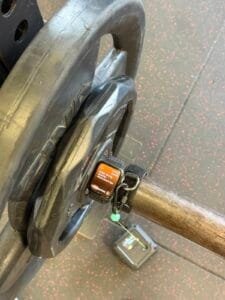
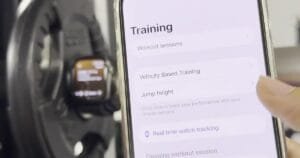
La democratización de Entrenamiento basado en la velocidad (VBT) utilizando los sensores internos del iPhone y el Apple Watch presenta retos técnicos complejos, especialmente en lo que respecta a la acelerometría. Aunque siempre recomendamos seguir nuestra guía de buenas prácticas, somos conscientes de que existen escenarios específicos en los que la detección de repeticiones puede variar en comparación con otros dispositivos de referencia.Para solucionarlo, hemos introducido Modo depuración.Si detectas que Spleeft no registra correctamente una repetición o una altura de salto en una situación concreta, puedes activar este modo. Al hacerlo, nos enviarás los datos en bruto para que nuestro equipo de desarrollo pueda analizar el caso y ajustar el algoritmo. El objetivo es reducir la curva de aprendizaje y hacer que Spleeft sea infalible en cualquier entorno.Actívalo antes de configurar cada juego en el iPhone. En el Apple Watch, toca el icono de ajustes bajo los modos de rendimiento. Ten en cuenta que activar este modo puede comprometer el rendimiento de tu dispositivo, ya que consume una cantidad significativa de memoria.Mejora en los ejercicios de arranque estático
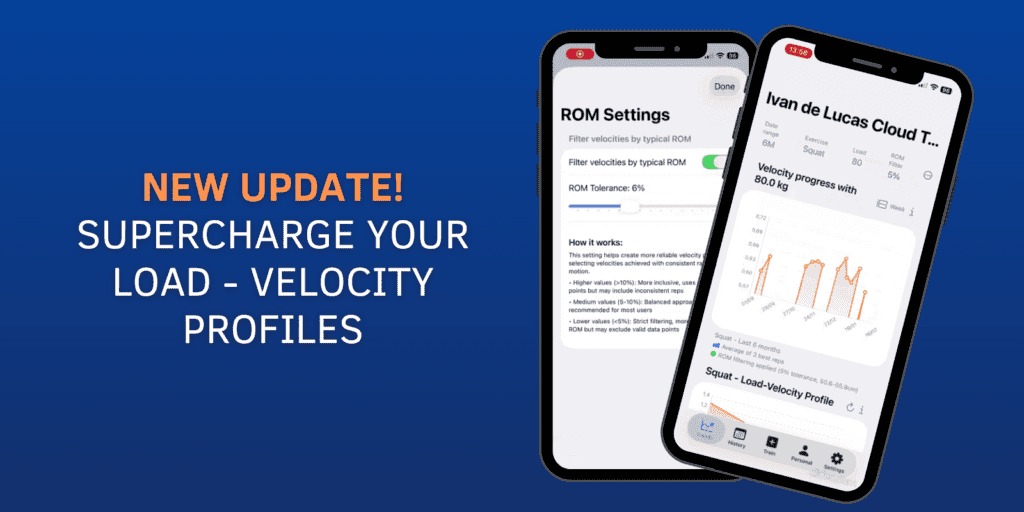
Gracias a los datos recogidos durante la fase beta, hemos optimizado la detección del inicio de la fase concéntrica en ejercicios que comienzan desde una posición estática (sin contramovimiento previo), como el peso muerto o variantes de pulsación pausada. Ahora, el algoritmo identifica el “impulso inicial” con mayor precisión, garantizando que la velocidad media refleje fielmente el esfuerzo realizado desde el primer milímetro de desplazamiento.2. Filtros de amplitud de movimiento (ROM) y agrupación temporal
La sección de tendencias es fundamental para evaluar la progresión a largo plazo. Sin embargo, un cambio de técnica puede generar ruido en los datos.- Filtro ROM en Tendencias: Al igual que en el perfil carga-velocidad, ahora puede filtrar sus gráficos de evolución por rango de movimiento. Esto es vital, ya que un aumento del ROM puede aumentar el tiempo bajo tensión y alterar la velocidad media sin indicar necesariamente un cambio en el rendimiento neuromuscular. Aumentar el ROM con cargas pesadas puede hacer que pases por el punto de bloqueo; con cargas ligeras, puede significar que pases más tiempo aplicando fuerza y acelerando.
- Agrupación temporal: Hemos añadido la opción de agrupar los datos por semanas o meses. Esto permite despejar la variabilidad diaria y observar más claramente si la programación está teniendo el efecto deseado.
3. Criterios de medición: Media de las 3 primeras repeticiones
En respuesta a las peticiones de muchos entrenadores que buscan maximizar la fiabilidad de las pruebas, hemos incluido la opción de mostrar tanto gráficos como KPI basados en el media de las 3 primeras repeticiones para cada carga. Este ajuste está disponible tanto en la vista de tendencias como en el perfil de carga-velocidad, lo que permite eliminar el sesgo de una repetición aislada y atípica.4. Evolución del perfil carga-velocidad
El análisis del perfil de carga-velocidad ha recibido una profunda actualización para facilitar el flujo de trabajo del profesional:Detección el día de la prueba
Para quienes utilizan Spleeft tanto en el entrenamiento diario como en sesiones de evaluación específicas, identificar las pruebas entre todo el volumen de datos podía resultar tedioso. Ahora, el sistema permite filtrar y enumerar específicamente los “días de prueba” detectados dentro de un intervalo de fechas, lo que permite saltar directamente a los datos de máximo rendimiento.Contextos: Equipos y grupos de edad
Ahora están disponibles las opciones de comparación por contexto:- Contexto del equipo: Permite comparar el perfil de un atleta con el perfil medio de su equipo bajo los mismos filtros de escala (carga absoluta, relativa a 1RM o masa corporal).
- Contexto del grupo de edad: Compara los datos con la media de los usuarios del mismo rango de edad, ideal para deportistas que utilizan la sincronización de iCloud y no están integrados en un equipo específico.
5. Ajustes de precisión e IU
- Detección automática de perfiles: Hemos hecho más estrictos los criterios para generar perfiles automáticos. Ahora se requiere una mayor dispersión en las cargas levantadas (0,4 m/s) para garantizar que el cálculo estimado de 1RM y la pendiente del perfil sean estadísticamente fiables.
- Gráficos interactivos: Ahora, los gráficos de carga-velocidad y carga-potencia son clicables en todo su espectro, no sólo en las cargas seleccionadas. Esto permite ver la estimación de velocidad o potencia para cualquier carga, lo que facilita la prescripción.
Conclusión
Nuestro compromiso sigue siendo el mismo: ofrecer una herramienta de precisión profesional con el mínimo roce. Con estas mejoras, el técnico recibe un servicio de mayor calidad con menos esfuerzo administrativo, lo que le permite centrarse en lo que de verdad importa: la interpretación de los datos y la toma de decisiones.
Iván de Lucas Rogero
Aplicación de rendimiento físico y CEO de MSC
Dedicado a mejorar el rendimiento atlético y el entrenamiento ciclista, combinando ciencia y tecnología para impulsar resultados.