If maximal strength is your “one big punch” quality, aerobic endurance is everything that happens after the first punch. It’s your ability to keep moving, keep thinking clearly, and keep producing useful 速度 long after the first surge of adrenaline has worn off.
In team sports it’s the player who is still closing space in the 90th minute. In the weight room it’s the athlete whose bar 速度 barely drops from set one to set four. In life it’s climbing three flights of stairs with a bag in each hand and realizing your breathing barely changed.
了解 meaning of aerobic endurance and knowing how do you improve cardiorespiratory endurance is non‑negotiable if you care about performance, recovery, or long-term health. And if you’re using Spleeft 应用程序, you have a powerful (and underused) ally to make aerobic work as measurable and intentional as your strength training.
立即下载适用于 iOS、Android 和 Apple Watch 的 SPLEEFT 应用程序!
The meaning of aerobic endurance (beyond “cardio”)
A simple description of aerobic endurance is your ability to perform exercise at a moderate intensity for an extended period of time, relying primarily on oxygen to fuel muscular work.¹
Physiologically, aerobic endurance depends on:
How well your lungs bring oxygen into the body
How effectively your heart and blood vessels deliver that oxygen
How capable your muscles are at using oxygen to produce ATP over time
That’s why the meaning of aerobic endurance is often used interchangeably with “aerobic fitness,” “cardiorespiratory endurance,” or “cardiovascular endurance” in the literature.²
From a coach’s point of view, good aerobic endurance means:
Athletes hold higher 速度 for longer before fatiguing
They recover faster between explosive efforts
Their heart rate and breathing calm down more quickly after intense bouts
In short: aerobic endurance is the foundation that makes all your high-intensity work repeatable.

Aerobic endurance vs cardiorespiratory endurance
If you’ve ever wondered whether “aerobic endurance” and “cardiorespiratory endurance” are just marketing synonyms, you’re not alone.
Most practical definitions of cardiorespiratory endurance describe the ability of the heart, lungs, and circulatory system to deliver oxygen to working muscles so they can sustain activity.² The description of aerobic endurance focuses on the capacity to maintain moderate to high intensity exercise over time.
Functionally:
Aerobic endurance = the performance outcome (how long, how hard you can go)
Cardiorespiratory endurance = the system capacity that underpins that outcome
VO₂ max, for example, is a physiological measure often used as a marker of aerobic fitness. Higher VO₂ max values generally indicate better aerobic endurance, although economy and thresholds also matter.³
For coaches, the labels matter less than the implications: you’re trying to build a system that can deliver and use oxygen efficiently so that your athletes can maintain useful 速度 and repeat high-quality efforts.
Why aerobic endurance matters in real performance
Aerobic endurance isn’t just for marathoners. Studies across sports show that higher aerobic capacity supports:⁴⁵
Better tolerance of high match loads in football and similar intermittent sports
Faster recovery between intense intervals or repeated sprints
Greater ability to sustain near-threshold efforts without catastrophic fade
On the daily-life side, research and clinical guidance point to improved aerobic endurance as a shield against cardiovascular disease, type 2 diabetes, and premature mortality.³
For your athletes, that means:
More work capacity in training blocks (more high-quality reps before they fall apart)
Less 疲劳 for the same workload
Smoother, quicker recovery between sessions
The question becomes: how do you improve cardiorespiratory endurance in a way that’s targeted, progressive, and doesn’t destroy strength and power in the process?
Training methods: how do you improve cardiorespiratory endurance?
There are several proven ways to increase aerobic endurance, all of which hinge on applying enough volume and intensity over time to stress the cardiovascular and muscular systems without tipping into chronic fatigue.
1. Continuous moderate-intensity training
Classic steady-state work at a comfortable but purposeful effort—often around 60–75% of max heart rate or a conversational pace.
Benefits: improved stroke volume, capillarization, and basic aerobic enzyme activity⁶
Best for: general health, early base phases, low-impact capacity building
This is the backbone of the description of aerobic endurance: the ability to “just keep going” for 20–60+ minutes.
2. Tempo / threshold work
Efforts around the lactate threshold (or functional threshold), usually something you can hold for 20–60 minutes but that feels “comfortably hard.”⁶⁷
Benefits: pushes up the intensity you can sustain aerobically, improves buffering and clearance
Best for: endurance athletes and team sport players needing strong “cruising” 速度
3. Interval training
Alternating work and rest segments at higher intensities is one of the most powerful tools to improve both VO₂ max and aerobic endurance.⁸
Examples:
4×4 min at ~80–90% HRmax with 3 min easy jog (classic aerobic intervals)
6–10×2–3 min at moderate-hard effort with equal or slightly shorter recoveries
A controlled meta-analysis found that both moderate-intensity continuous running and high-intensity continuous running can significantly improve aerobic performance and VO₂ max, with higher-intensity protocols sometimes achieving similar gains in less total time.⁸
4. High-intensity interval training (HIIT)
Very intense intervals (often in Zones 4–5 of heart rate) with brief recovery can also improve aerobic endurance when programmed carefully.⁸⁹
Benefits: strong central (heart) and peripheral (muscle) stimulus
Risks: easy to overdo, can interfere with strength/hypertrophy if not balanced¹⁰
Every one of these methods is a valid answer to how do you improve cardiorespiratory endurance, but the right blend depends on the athlete’s context, training age, and other performance goals.
Where Spleeft fits: turning aerobic work into velocity-based conditioning
Most aerobic plans still live in heart-rate, RPE, or pace-only land. Useful, but incomplete.
Spleeft 应用程序 lets you treat conditioning like you treat lifting: with actual 速度 data.
You can:
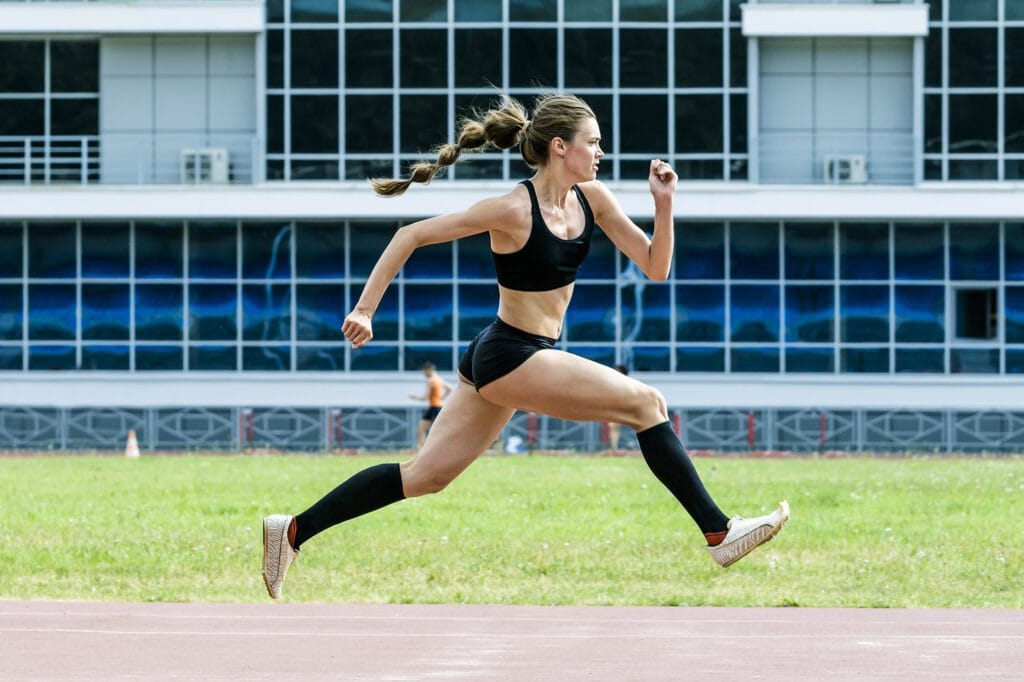
Measure running 速度 in intervals or longer efforts
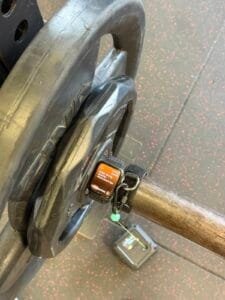
Track bar 速度 if you use cyclic loaded patterns (e.g., light barbell complexes) for aerobic work
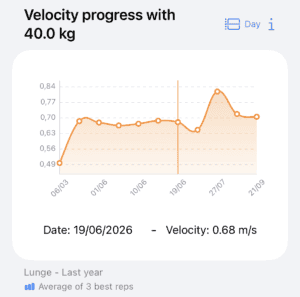
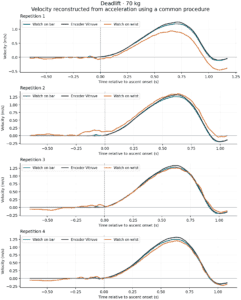
See how 速度 decays across reps or sets—an endurance signal in its own right
Paired with Spleeft Hub or a simple VO₂/threshold assessment, you can define 速度 zones for different kinds of aerobic endurance work, then:
Set precise interval 速度 targets instead of just “run hard”
Stop sessions when 速度 or output drops more than your planned threshold
Individualize training for athletes with different capacities but following the same structure
Now the description of aerobic endurance in your program isn’t “30 minutes of cardio”—it’s “25–35 minutes in Zone 2 at 3.0–3.4 m/s” or “8×2 min at 90–95% of your aerobic 速度 baseline.” Spleeft makes that concrete rep by rep.

Practical ways to use Spleeft for aerobic endurance blocks
Let’s make it tangible.
Example 1: Building a basic aerobic base
Goal: improve low-intensity aerobic endurance in a field-sport squad.
Protocol:
2–3 continuous sessions per week of 20–40 minutes each
Target heart-rate Zone 2–3 (roughly 60–75% HRmax)
Spleeft: log average 速度 for each continuous block
Coaching twist with Spleeft:
Over 4–6 weeks, look for gradual increases in average 速度 at the same heart rate or RPE
如果 速度 regresses at a given heart rate for several sessions, you have an early fatigue or illness signal
Here aerobic endurance improvement shows up as “same internal load, higher external velocity”—exactly the type of trend Spleeft is built to capture.
Example 2: Aerobic intervals for team sports
Goal: improve high-end aerobic endurance and recovery between sprints.
Protocol (2×/week):
6–8×3 min runs at a strong but sustainable effort
2 min easy jog between efforts
Target: 80–90% of best-trial aerobic 速度 (derived from a 6–8 min time trial or MAS test)
与Spleeft一起
Each rep shows live 速度, not just time
You set a rule: if an athlete drops below 95% of target 速度 for two reps in a row, their interval work is done for the day
This respects the meaning of aerobic endurance as a quality that improves when reps are high-enough quality, not when athletes limp through junk intervals.
Example 3: Blending strength and aerobic endurance
Goal: improve cardiorespiratory endurance without losing strength.
Concurrent training research shows that high volumes of intense endurance work can blunt strength, power, and hypertrophy gains, especially when poorly sequenced.¹⁰
有了 Spleeft,您可以
Keep strength work velocity-based (e.g., 0.50–0.70 m/s on squats)
Run shorter, controlled aerobic endurance intervals after strength, tracking 速度 so quality stays high
Adjust endurance volume when bar 速度 trends show accumulating fatigue
Instead of asking “how do you improve cardiorespiratory endurance” in isolation, Spleeft lets you ask: “how do we improve it without compromising our main strength/power qualities?” The answer lives in the data.
Example 4: Individualizing aerobic endurance within a squad
In any squad, some athletes naturally have high aerobic endurance, others lag behind.
A practical flow:
Run a simple aerobic assessment—e.g., 6-minute run test or shuttle test—and use results plus heart-rate data to categorize current aerobic endurance.
Use Spleeft to identify each player’s typical 速度 at a given heart rate or RPE.
Group athletes into three tracks:
Low aerobic capacity: more continuous work, slightly lower interval 速度
Medium: balanced continuous + interval mix
High: more aggressive interval 速度 targets, fewer but sharper bouts
Interval training studies in football players suggest that athletes with lower aerobic capacity may respond better to more extensive intervals, while those with higher capacity can handle more intensive or shorter intervals at higher relative intensity.⁵
Spleeft gives you real 速度 feedback to ensure each group is actually working where you think they are—no more “same whistle, wildly different stimulus.”
常见问题
1. How often should athletes train aerobic endurance during the season?
For most field and court sports, 2–3 dedicated aerobic endurance exposures per week (often blended into football conditioning, small-sided games, or structured runs) is enough to maintain or improve capacity, provided match demands are high.²⁴ With Spleeft, you can trim volume if weekly 速度 and readiness metrics suggest accumulating fatigue.
2. Does improving aerobic endurance always mean long, boring runs?
Not at all. The meaning of aerobic endurance is about sustaining effort, not suffering through monotony. Well-designed intervals, small-sided games, circuit-style conditioning, and mixed-modality work can all build aerobic endurance. The key is sustaining work long enough and often enough at the right internal and external load, which Spleeft helps you monitor through 速度 trends.
3. Can focusing on aerobic endurance hurt strength and hypertrophy?
It can, especially if you add a lot of long-duration, high-frequency cardio on top of an already demanding lifting schedule. A meta-analysis on concurrent training found that certain combinations of endurance modality, volume, and frequency can blunt strength and hypertrophy gains.¹⁰ Using Spleeft to cap aerobic sessions based on 速度 drop-off and to protect key strength days is a practical way to get the benefits of aerobic endurance without the interference.
4. How do I know if my aerobic endurance is actually improving?
Beyond “it feels easier,” look for objective markers:
Higher average 速度 at the same heart rate or RPE
Lower heart rate at the same 速度
More total high-quality work (time or distance) before 速度 deteriorates
With Spleeft, you can track all three by logging 速度 and pairing it with heart-rate and RPE data. If across 4–6 weeks your athletes are moving faster at the same internal load, their aerobic endurance is improving.
5. Is aerobic endurance equally important for all positions and sports?
这 description of aerobic endurance applies broadly, but its relative importance shifts by role. A central midfielder or basketball guard lives and dies on aerobic endurance, whereas a powerlifter needs just enough aerobic endurance to recover between heavy sets and sessions. Spleeft lets you calibrate: more 速度-based aerobic work for roles that cover more distance or have higher repeat-effort demands; minimal but targeted work for power-dominant athletes.
参考
Science in Sport. “What is Aerobic Endurance?” Definition and practical explanation of aerobic endurance and training effects.
UC Davis Health. “VO₂max and Aerobic Fitness” – explanation of aerobic fitness, cardiorespiratory endurance, and oxygen delivery systems.
Hinge Health & ADA guidance on the health impact of aerobic endurance and physical activity for chronic disease management.
Tomczak A et al. “Aerobic capacity as an indicator in different kinds of sports.” Comparative VO₂ max profiles and endurance requirements across disciplines.
Research on VO₂ max capacity, interval training methods, and their effects on endurance in football players.
Endurance training texts summarizing continuous and tempo training effects on aerobic metabolism and fatigue resistance.
Heart-rate zone resources describing how different zones (especially Zones 2–3) target aerobic endurance adaptations.
Studies comparing high-intensity continuous or interval running vs moderate continuous running on aerobic endurance and VO₂ max.
Reviews on HIIT and its role in improving both aerobic and anaerobic capacities when managed properly.
Hickson RC et al. and subsequent meta-analyses on concurrent training interference between aerobic and resistance work.