
Si sale sul monte di lancio, si fa un bel respiro e si lancia. La pistola lampeggia un numero che è... bene. Non male. Ma non il numero che fa interrompere la conversazione agli allenatori a metà frase.
Se siete qui, probabilmente vi starete chiedendo: “Quali allenamenti di baseball per i lanciatori per aumentare la velocità funzionano davvero?”.”
E avrete già sentito i soliti consigli: lanciare di più, lanciare a lungo, palle pesate, correggere la meccanica, diventare più forti. Il problema non è che queste idee siano sbagliate. Il problema è che la maggior parte dei lanciatori le applica come una ricetta senza misure: niente termometro, niente bilancia, solo vibrazioni.
Ecco che l'allenamento della velocità nel baseball diventa molto più interessante quando si introduce il Velocity-Based Training (VBT). Non “allenamento duro”. Non “allenamento esplosivo”. Allenarsi con obiettivi di velocità misurabili, fatica misurabile (perdita di velocità) e un piano chiaro per progredire il carico di settimana in settimana.⁹
Questo articolo è un'analisi completa e adatta agli allenatori dell'allenamento della velocità nel baseball basato sul VBT e su come utilizzare l'App Spleeft per renderlo pratico ogni giorno in palestra.
SCARICA ORA L'APP SPLEEFT PER iOS, ANDROID E APPLE WATCH!
Da cosa è composta la “velocità del baseball”
Il lancio non è un trucco del braccio. È un problema di catena cinetica completa: la forza e la quantità di moto si trasferiscono dal terreno, attraverso le anche e il tronco, nel braccio di lancio e infine nella palla. Le analisi della meccanica del lancio mostrano costantemente che la velocità del lancio è legata a specifici fattori cinematici/cinetici di tutto il corpo, non solo alla spalla o al gomito isolatamente.³
Questo è importante perché cambia il modo in cui si risponde alla domanda “Come lanciare una palla da baseball più velocemente”:
Non basta “rafforzare il braccio”.”
Si costruisce la produzione di forza nella parte inferiore del corpo.⁴
Si costruiscono potenza di rotazione e tempismo attraverso il tronco.
Si allena il braccio a tollerare ed esprimere questa potenza in modo sicuro.⁵
E misurate l'output per non allenarvi alla cieca.⁹
Un modello mentale utile:
Parte inferiore del corpo = il motore
Tronco = la trasmissione
Braccio = la frusta (e la parte che si rompe se i pezzi precedenti sono deboli o sbagliati)
Perché il VBT si adatta al baseball come un guanto
I programmi di sollevamento tradizionali spesso prescrivono il carico in percentuale (70% di 1RM, 80% di 1RM, ecc.). Questo può funzionare. Ma i lanciatori non sono sollevatori di potenza. La vostra “prontezza” cambia molto a seconda del volume di lancio, dei viaggi, del sonno e del caos generale di una stagione.
Il VBT risolve un grosso problema: vi dà un feedback oggettivo su come state muovendo il carico oggi. Trasforma il “credo di essere esplosivo” in “la mia velocità alla sbarra è nella zona desiderata”⁹.
Due idee fondamentali del VBT sono particolarmente utili per i lanciatori:
Profilazione della velocità di carico
La relazione carico-velocità è ampiamente utilizzata in allenamento della forza per stimare e monitorare le prestazioni, perché all'aumentare del carico la velocità di sollevamento diminuisce in modo prevedibile.⁶⁷
In pratica, ciò significa che è possibile:
Tracciate se state diventando più forti senza raggiungere il massimo costantemente⁶.
Si nota precocemente l'affaticamento (la velocità cala in presenza di carichi che normalmente si muovono più velocemente)⁹
Regolare i carichi di allenamento in base alla realtà, non a un foglio di calcolo⁹.
Soglie di perdita di velocità
La perdita di velocità è il rallentamento delle ripetizioni nell'arco di una serie. È un misuratore di fatica semplice e brutalmente onesto. Se la prima ripetizione è nitida e la sesta sembra impantanata nel fango, la sessione è appena cambiata, anche se avete fatto la stessa prescrizione “3×6”.
Per i lanciatori, la gestione della fatica non è solo prestazione, ma anche gestione del rischio. Quando la fatica sale, la meccanica può degradarsi e il braccio tende a pagarne il conto.³
È qui che Spleeft App si inserisce in modo naturale: consente di tenere traccia della velocità delle ripetizioni, di stimare il carico ottimale e di gestire la perdita di velocità in modo che i vostri allenamenti di baseball per i lanciatori per aumentare la velocità rimangano nella zona produttiva invece di scivolare nel volume spazzatura.⁹
Una mappa delle zone di velocità a misura di allenatore
Invece di etichettare le zone con la terminologia “velocità-forza”, manteniamola semplice e pertinente al baseball: si allenano parti diverse dello spettro forza-velocità.⁹
Tabella: zone di velocità pratica per i lanciatori (palestra)
| Nome della zona (in inglese) | Intervallo tipico di velocità della barra | Obiettivo primario | I migliori esempi di sollevamento |
|---|---|---|---|
| Forza massima (pesante) | ~0,20-0,40 m/s | Costruire una capacità di forza elevata | Squat, trap bar deadlift |
| Forza con intenzione (moderata-pesante) | ~0,40-0,60 m/s | Costruire una forza che si possa esprimere velocemente | Squat e trazioni più pesanti |
| Zona di potenza (moderata) | ~0,60-0,80 m/s | Costruire la forza × la velocità in uscita | Jump squat, trazioni alla sbarra più leggere |
| Focus sull'accelerazione (leggera/moderata) | ~0,80-1,00 m/s | Produzione rapida di forza | Salti con squat diviso, salti con carico (leggeri) |
| Reattivo/balistico (molto leggero) | ~1,00 m/s e oltre (contestuale) | Uscita e intento elastici/reattivi | Pliometria, lanci di palla medica |
Nota importante: l'esatto intervallo di velocità “migliore” dipende dall'esercizio, dall'atleta e dal dispositivo/app utilizzato per misurarlo. Il punto è la logica: abbinate la zona all'adattamento desiderato e non lasciate che la fatica vi spinga accidentalmente in una zona diversa.⁹
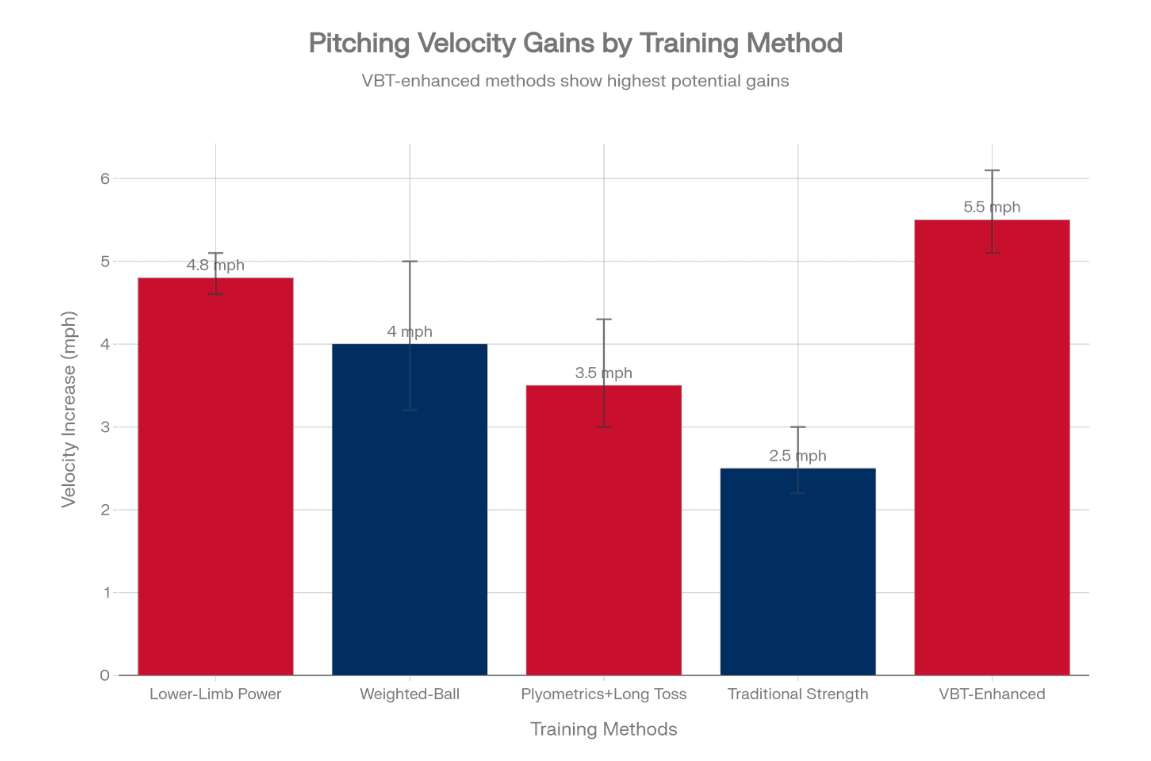
Cosa indicano le prove di allenamento della velocità nel baseball
Parliamo di metodi che si ripetono nella ricerca sulle prestazioni dei lanci e nella pratica di alto livello.
L'allenamento della parte inferiore del corpo è importante (molto)
I lavori che si concentrano sul contributo degli arti inferiori evidenziano che la velocità di lancio può essere migliorata puntando sulla forza e sulla potenza della parte inferiore del corpo, in quanto la parte inferiore del corpo è il principale motore della forza e della generazione di slancio.⁴
Tradotto: se volete ottenere risultati più rapidi sul monte di lancio, dovete allenare le gambe e le anche come se fossero davvero importanti, perché lo sono davvero.⁴
I test di salto si riferiscono alle prestazioni dei lanciatori
C'è un interesse costante per il modo in cui i risultati dei salti si relazionano con le metriche dei lanci, e le recensioni discutono le relazioni tra i vari test di salto e le prestazioni dei lanciatori di baseball.²
Non è necessario diventare un “atleta del salto”, ma si dovrebbe considerare l'abilità nel salto come un indicatore pratico della potenza e della prontezza della parte inferiore del corpo, in particolare durante la stagione, quando massimizzare i sollevamenti è una cattiva idea.²
Programmi con palla ponderata: utili, ma non casuali
Le revisioni sistematiche sui programmi di potenziamento della velocità della palla ponderata mostrano che questi approcci possono aumentare la velocità di lancio, ma comportano importanti considerazioni di programmazione e di rischio.¹
Punto a parte: l'allenamento con palle da baseball più leggere è stato studiato come metodo per aumentare la velocità di lancio senza necessariamente aumentare il rischio di lesioni, a seconda di come viene applicato.⁵
Conseguenza pratica: le palle ponderate non sono “cattive” o “buone”. Sono uno strumento che ha un costo. Se le usate, avete bisogno di struttura, progressione e monitoraggio della fatica, esattamente il tipo di ambiente in cui i principi del VBT sono utili.¹⁹
L'accesso all'allenamento della forza ha un impatto sulle metriche del lancio
Una ricerca che esamina le limitazioni fuori stagione delle attrezzature per l'allenamento della resistenza suggerisce che l'esposizione all'allenamento della forza (o la sua mancanza) può avere un impatto sulle metriche relative al lancio in ambito collegiale.⁸
Traduzione: la palestra non è facoltativa se si vogliono ottenere progressi velocistici a lungo termine. Ma non è necessario un lavoro casuale in palestra, bensì un lavoro mirato e misurato.⁸
Lo stack di allenamento “come lanciare una palla da baseball più velocemente” (a cosa dare priorità)
Se volete una gerarchia pratica (soprattutto per gli allenatori che costruiscono un piano), usate questa:
1) Qualità e disponibilità del movimento
Mobilità dell'anca che si può controllare (non gare di flessibilità passiva)
Controllo della rotazione toracica
Controllo scapolare e capacità della spalla
Un programma di lancio che non contrasta il vostro volume di sollevamento
Tutto questo è importante perché la velocità del lancio è legata alla sequenza e alla cinematica di tutto il corpo, non solo alla forza del braccio.³
2) Forza e potenza della parte inferiore del corpo
Schemi di squat / split squat
Schemi di cerniere (il trap bar deadlift è spesso un'attività di pitcher-friendly)
Salti (basso volume, alto intento)
L'allenamento degli arti inferiori può essere un fattore di miglioramento della velocità di lancio.⁴
3) Potenza e tempi di rotazione
Lanci di palle mediche (lancio di palline, variazioni di shotput, slam rotazionali)
Forza antirotazione (per crearla è necessario resistere alla rotazione)
Queste componenti sono in linea con il coinvolgimento del tronco evidenziato nelle revisioni della cinematica del lancio e della velocità.³
4) Cura e tolleranza del braccio
Forza e resistenza della cuffia dei rotatori
Supporto per la rotazione scapolare verso l'alto
Capacità dell'avambraccio/della presa (spesso ignorata)
Gli interventi incentrati sul braccio e sul carico specifico del lancio necessitano di una programmazione consapevole dei rischi.¹
5) Misurazione e autoregolazione (il moltiplicatore)
Tracciamento della velocità della barra⁹
Soglie di perdita di velocità⁹
Aggiornamenti del profilo carico-velocità⁶⁷
È qui che il VBT aiuta a mantenere il piano onesto e personalizzato.⁹
Allenamenti di baseball per lanciatori per aumentare la velocità (stile Vbt)
Di seguito è riportata una struttura settimanale che si può eseguire in bassa stagione (o all'inizio della pre-stagione) con 3-4 giorni di palestra. È costruita intenzionalmente in modo da poter allenare la “velocità del baseball” senza trasformare ogni sessione in un festival della fatica.⁹
Panoramica settimanale (esempio)
Giorno 1: Forza della parte inferiore del corpo + tronco
Giorno 2: forza della parte superiore del corpo (adatta ai lanciatori) + cura delle braccia
Giorno 3: Potenza della parte inferiore del corpo + potenza di rotazione
Giorno 4 (facoltativo): Capacità mista + mobilità + accessori a basso stress
GIORNO 1: FORZA DELLA PARTE INFERIORE DEL CORPO + TRONCO
A1) Sollevamento alla sbarra o variante dello squat
4-6 serie da 3-5 ripetizioni
Usate l'App Spleeft per mantenere le ripetizioni in un intervallo di velocità pesante ma controllato (zona di forza massima)⁹.
L'arresto si imposta se la perdita di velocità è elevata e la tecnica si degrada (un pratico guardrail)⁹.
A2) Split squat (con il piede posteriore sollevato o standard)
3-4 serie di 6-8 ripetizioni
Zona a velocità moderata, affaticamento controllato⁹
B) Lavoro antirotazione (Pallof press o prese ai cavi)
3 serie, controllate (la funzione del tronco si allinea all'importanza della sequenza del corpo intero)³
C) Finitore per la cura delle braccia
Lavoro di retrazione/depressione scapolare
Volume di rotazione esterna della cuffia dei rotatori (leggero)¹
GIORNO 2: FORZA DELLA PARTE SUPERIORE DEL CORPO (ADATTA ALLE SPALLE) + CURA DELLE BRACCIA
A) Panca con manubri o con impugnatura neutra
3-5 serie da 5-8 ripetizioni
Tracciare la velocità, se applicabile; l'obiettivo è la qualità delle ripetizioni, non la macinazione⁹.
B) Variazione della vogata (possibilmente sostenuta dal petto)
4 serie di 6-10 ripetizioni
C) Pressa a terra (spesso adatta alle spalle)
3 serie da 8 ripetizioni
D) Blocco per la cura delle braccia (breve e costante)
Rotazione esterna + trapezio inferiore + lavoro del serrato¹
GIORNO 3: POTENZA DELLA PARTE INFERIORE DEL CORPO + POTENZA DI ROTAZIONE
A) Jump squat (carico leggero o moderato)
5-8 serie di 2-3 ripetizioni
Tracciate la velocità con Spleeft e mantenetela nella vostra “zona di potenza”⁹.
Fermatevi prima se la velocità cala; questa è una pratica di potenza, non di condizionamento⁹.
B) Salto pliometrico (box jump o broad jump)
4–6 serie da 2–3 ripetizioni
Riposo prolungato, intento elevato (collegamenti di salto con le relazioni sulle prestazioni dei lanciatori)²
C) Lanci rotatori con palla medica
4-6 serie di 3-5 ripetizioni per lato
Trattatelo come un allenamento di “baseball a lanci veloci”: ripetizioni precise, molto riposo².
GIORNO 4 (FACOLTATIVO): CAPACITÀ + MOBILITÀ + VOLUME A BASSO STRESS
Spinte con la slitta, trasporti leggeri, circuiti di mobilità
Mantenere un affaticamento ragionevole; l'obiettivo è la durata⁹.
Principio chiave del coaching: Per i lanciatori, l'allenamento di potenza dovrebbe essere noioso sulla carta ed esplosivo nell'esecuzione. Se la sessione si trasforma in un pasticcio di sudore, di solito le prestazioni diminuiscono e la giornata di lancio successiva peggiora.⁹
Come SpleeftApp rende tutto questo più facile (e sicuro)
Ecco il problema quotidiano nell'allenamento del baseball: gli allenatori programmano la “potenza”, ma gli atleti vanno alla deriva nella “fatica”. Oppure gli allenatori programmano la “forza”, ma gli atleti muovono la sbarra come se fossero mezzi addormentati.
L'App Spleeft vi aiuta:
Misurare la velocità delle ripetizioni in esercizi alla sbarra e movimenti selezionati⁹.
Tenere traccia della perdita di velocità per evitare che i set si trasformino in macinini⁹.
Costruire e perfezionare il profilo di velocità di carico nel tempo⁶⁷
Stimare il “carico ottimale” per la giornata in base al modo in cui ci si muove⁹.
Mantenere l'allenamento onesto quando il calendario della stagione è caotico⁹.
Esempi pratici:
Se il vostro solito carico di riscaldamento si muove più lentamente del normale, non siete pronti. Adattate la giornata.⁹
Se la perdita di velocità raggiunge presto la soglia, significa che avete accumulato fatica più velocemente del previsto. Riducete il volume.⁹
Se la velocità del jump squat del giorno di potenza è inferiore a quella di base, non bisogna “spingere”. State allenando le ripetizioni lente, non la potenza.⁹
È così che si rimane sul percorso produttivo verso “come lanciare una palla da baseball più velocemente” senza bruciare il braccio (o il sistema nervoso) dell'atleta nel processo.⁹

Una progressione di allenamento della velocità nel baseball di 12 settimane
Settimane 1-4: costruire la base (forza + esposizioni di potenza pulita)
Pesantezza della parte inferiore del corpo 1-2 volte a settimana⁴
Potenza della parte inferiore del corpo 1 volta a settimana²
Lanci a rotazione 2x/settimana (basso volume)²
Utilizzare Spleeft per stabilire le velocità di base e impostare i massimali di perdita di velocità sensibili⁹.
Settimane 5-8: spostamento verso la produzione di potenza
Ridurre leggermente il volume pesante⁹
Aumentate la qualità del lavoro di potenza (non la quantità)⁹.
Aggiungete variazioni mirate con la palla medica².
Se si utilizzano palle ponderate, mantenere una progressione conservativa e monitorare l'affaticamento¹.
Settimane 9-12: conversione in uscita dal tumulo
Mantenere la forza con una dose efficace minima⁸
Mantenere il lavoro di potenza in modo nitido⁹
Aumentare la specificità delle sessioni di lancio (nell'ambito della struttura del programma di lancio)³
Utilizzare i controlli di prontezza di Spleeft per evitare di accumulare fatica pesante nei giorni di lancio chiave⁹.
Domande frequenti
I lanciatori dovrebbero sollevarsi pesantemente durante la stagione o è meglio andare leggeri e “rimanere freschi”?
Il sollevamento durante la stagione dovrebbe di solito orientarsi verso il mantenimento della forza e della potenza con un volume inferiore. Le esposizioni pesanti possono ancora essere utili, ma l'obiettivo è la “dose minima efficace”, non la ricerca dei PR in palestra. Usate Spleeft per mantenere stabile la velocità e tagliate i set quando la disponibilità è bassa, invece di forzare un volume programmato.⁸⁹
Gli esercizi con le macchine aiutano la velocità nel baseball o i lanciatori hanno bisogno solo di pesi liberi?
Le macchine possono aiutare a sviluppare la capacità tissutale e l'ipertrofia con una minore richiesta di abilità e spesso un minore stress articolare. I pesi liberi tendono a richiedere una maggiore coordinazione e possono migliorare i modelli di trasferimento della forza. Un piano intelligente utilizza entrambi: pesi liberi per lo schema principale, macchine per il volume e il supporto articolare. Tracciate la velocità nei grandi schemi dove conta di più.⁶⁹
Come devono programmare i lanciatori le settimane di deload in un piano incentrato sulla velocità?
I distacchi possono essere pianificati (ogni 4-6 settimane) o reattivi (quando le prestazioni calano). Un approccio pulito: mantenere il carico simile, ma ridurre il volume di ~30-50% e mantenere le soglie di perdita di velocità più strette. Se Spleeft mostra una persistente soppressione della velocità di base, questo è un forte segnale di delocalizzazione o di riduzione della sovrapposizione di lanci e sollevamenti.⁹
Due giorni di palestra a settimana possono ancora aumentare la velocità nel baseball?
Sì, soprattutto per i lanciatori giovani e intermedi, se questi due giorni sono mirati, progressivi e se si gestisce bene il volume di lancio. Due giorni di alta qualità (uno incentrato sulla forza e uno sulla potenza) spesso battono quattro giorni mediocri in cui la fatica uccide l'intenzione. Spleeft vi aiuta a mantenere questi due giorni veramente di alta qualità.⁸⁹
Qual è una semplice batteria di test per monitorare i progressi oltre alle letture del radar?
Utilizzare una piccola serie di test ripetibili: un test di salto (salto in contromovimento), un controllo della velocità submassimale alla sbarra su un'alzata chiave e un test di distanza/consistenza del lancio della palla medica rotante. I test di salto e le relazioni con le prestazioni dei lanciatori sono comunemente discussi nella letteratura sulle prestazioni nel baseball.² Accoppiate questi test con le letture radar durante sessioni di lancio costanti.

Iván de Lucas Rogero
Prestazioni fisiche MSC e CEO SpleeftApp
Dedicato al miglioramento delle prestazioni atletiche e dell'allenamento ciclistico, unendo scienza e tecnologia per ottenere risultati.
Riferimenti
Programmi di potenziamento della velocità con palla pesata per lanciatori di baseball: A Systematic Review. (2019).
Il rapporto tra vari test di salto e le prestazioni dei lanciatori di baseball: Una breve rassegna. (2024).
Parametri cinematici predittivi della velocità del lancio nei lanciatori di baseball da giovani a professionisti: Una revisione sistematica qualitativa. (2023).
From Ground Up: aumentare la velocità del lancio attraverso l'allenamento degli arti inferiori. (2024).
L'allenamento con palle da baseball più leggere aumenta la velocità senza aumentare il rischio di infortuni. (2020).
Relazioni carico-velocità e previsione della forza massima. (2022).
Utilizzo della relazione carico-velocità per la previsione dell'1RM. (2010).
Limitare l'accesso all'attrezzatura per l'allenamento della resistenza durante la bassa stagione: L'impatto sulle metriche dei lanciatori collegiali. (2024).
Metodi per la regolazione e il monitoraggio dell'allenamento alla resistenza (include i principi della VBT e i quadri pratici di monitoraggio). (2020).
Pensiero conclusivo
Se volete ottenere i risultati più rapidi del baseball, se volete davvero sapere come lanciare una palla da baseball più velocemente, non avete bisogno di più casualità. Avete bisogno di una migliore misurazione.
L'allenamento della velocità nel baseball funziona meglio quando:
La forza e la potenza della parte inferiore del corpo vengono allenate in modo intelligente⁴.
L'esplosività rotazionale è praticata con intenzione².
Il volume di lancio viene gestito, non indovinato¹.
Viene monitorata la fatica (perdita di velocità)⁹.
La selezione del carico è adattata al giorno (profilazione della velocità di carico)⁶⁷
Questo è ciò che offre il VBT. Ed è per questo che l'uso dell'App Spleeft negli allenamenti di baseball per i lanciatori per aumentare la velocità può fare la differenza tra “allenarsi duramente” e “allenarsi con direzione”"⁹.