
Conosci già le basi: sollevare oggetti pesanti, mangiare proteine, dormire bene. Ma sapere cosa fare e cosa fare effettivamente facendo con il sistema giusto in atto sono due cose completamente diverse. La maggior parte delle persone si lancia in un'avventura casuale piano di allenamento e sperare che funzioni. Altri cambiano routine ogni tre settimane perché non vedono i risultati sperati. La frustrazione è reale: ti alleni in palestra con costanza, ti impegni al massimo, ma c'è qualcosa che non va nel tuo approccio.
Ecco la verità: avere il diritto programma di allenamento della forza Non si tratta solo di scegliere gli esercizi. Si tratta di struttura. Si tratta di sapere esattamente quali gruppi muscolari si allenano ogni giorno, con quale volume li si allena e se la velocità delle ripetizioni è effettivamente nella zona ipertrofica. Un buon migliore routine di allenamento ti dà chiarezza. E quando a questa chiarezza si unisce una misurazione oggettiva, i risultati arrivano.
Analizziamo nel dettaglio cosa è un completo programma di esercizi di forza per aumento muscolare come funziona davvero, settimana dopo settimana, giorno dopo giorno, e come misurare i tuoi progressi in modo da non sperare solo di migliorare.
SCARICA ORA L'APP SPLEEFT PER iOS, ANDROID E APPLE WATCH!
La scienza dietro l'aumento della massa muscolare: comprendere l'adattamento del tuo corpo
Prima di parlare di esercizi specifici, è bene sapere questo: crescita muscolare (l'ipertrofia) non è magia. È il risultato diretto di tre fattori: tensione meccanica, stress metabolico e danno muscolare. Quando ti alleni correttamente, crei uno stimolo che costringe i tuoi muscoli ad adattarsi, aumentando di dimensioni.¹
La sfida è che la maggior parte migliori routine di allenamento affrontare chiaramente solo uno o due di questi fattori. A piano di allenamento che è sparso o sfocato fornisce segnali deboli. Ma un segnale ben strutturato migliore routine di allenamento prende di mira strategicamente tutti e tre nel corso della settimana.²
La ricerca è chiara: per massimizzare la crescita muscolare, è necessario:
Sovraccarico progressivo: Aumentare gradualmente le richieste sui muscoli nel tempo³
Volume adeguato: Circa 10-20 serie per gruppo muscolare a settimana⁴
Frequenza corretta: Allenare ogni gruppo muscolare 2-3 volte a settimana⁵
Intervalli di ripetizioni controllati: In genere 6-12 ripetizioni per serie per l'ipertrofia⁶
Velocità costante: Muoversi con l'intento di mantenere la qualità delle ripetizioni tra le serie
Quest'ultimo punto è spesso trascurato, ma è fondamentale: la velocità con cui si eseguono le ripetizioni ha un impatto diretto sullo stimolo allenante. La ricerca dimostra che mantenere una perdita di velocità di circa 30-40% per serie, passando da ripetizioni esplosive iniziali a ripetizioni più controllate in seguito, produce uno stimolo ipertrofico ottimale.⁷ È qui che la maggior parte degli atleti fallisce. Eseguono ripetizioni extra oltre il limite previsto dallo stimolo, accumulando affaticamento senza un proporzionale beneficio ipertrofico.
Come scegliere la suddivisione dell'allenamento: qual è la struttura giusta per un programma di allenamento della forza?
Prima di progettare il tuo specifico programma di allenamento della forza, devi decidere come distribuire il tuo allenamento durante la settimana. La ricerca dimostra che diversi approcci funzionano; il "migliore" è quello che seguirai effettivamente con costanza.⁸
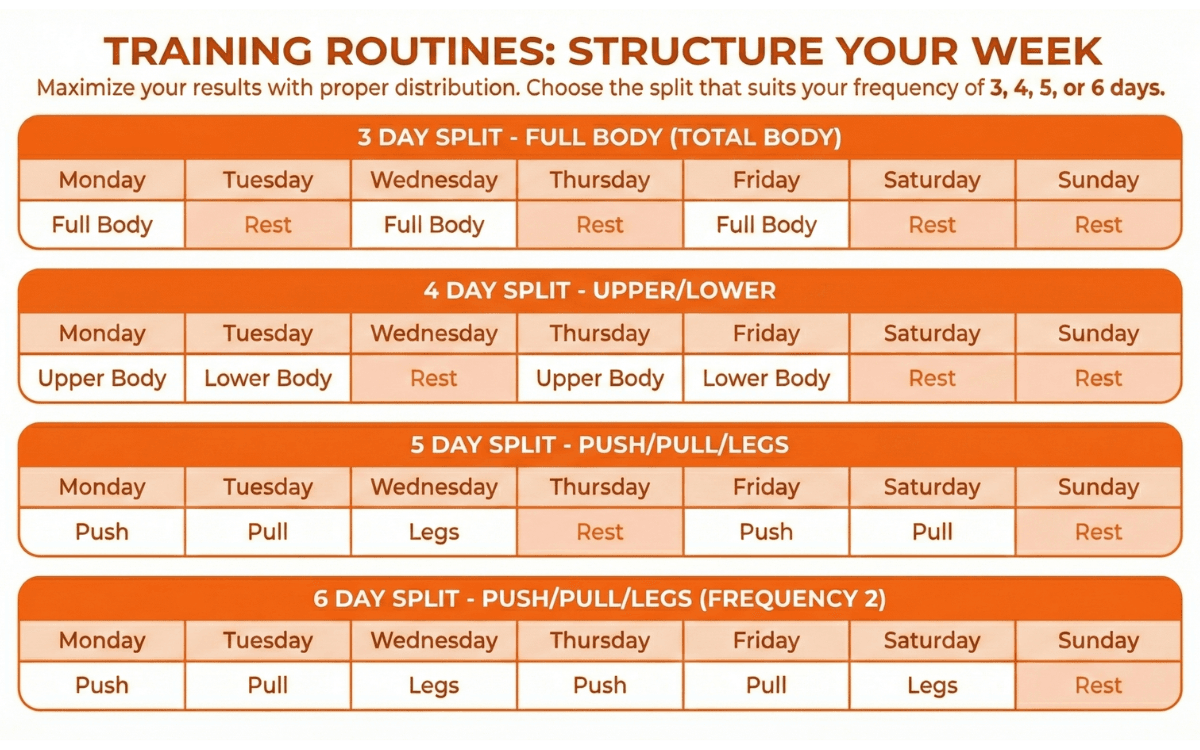
Split completo del corpo (3 giorni a settimana)
| Lunedi | Martedì | Mercoledì | Giovedì | Venerdì | Sabato | Domenica |
|---|---|---|---|---|---|---|
| Corpo intero | Riposo | Corpo intero | Riposo | Corpo intero | Riposo | Riposo |
Vantaggi:
Frequenza più alta per gruppo muscolare (3 volte a settimana)
Ottimo per principianti e atleti con tempi di recupero limitati
Efficiente per chi ha poco tempo a disposizione
Miglior apprendimento motorio attraverso la pratica ad alta frequenza
Svantaggi:
Elevata stanchezza per sessione
Minori opportunità di lavoro in isolamento
Potrebbe non essere adatto ad atleti avanzati che cercano un volume elevato
Ideale per: Principianti, impegni, ritorno all'allenamento
Divisione superiore-inferiore (4 giorni a settimana)
| Lunedi | Martedì | Mercoledì | Giovedì | Venerdì | Sabato | Domenica |
|---|---|---|---|---|---|---|
| Superiore | Inferiore | Riposo | Superiore | Inferiore | Riposo | Riposo |
Vantaggi:
Frequenza bilanciata (2 volte a settimana per gruppo muscolare)
Durata moderata della sessione
Consente lavori composti e di isolamento
Ricerca scientifica per la crescita muscolare⁴
Svantaggi:
Richiede un impegno di 4 giorni
È necessaria una programmazione più complessa
Ideale per: Sollevatori intermedi con programma coerente
Split push-pull-legs (5-6 giorni a settimana)
| Lunedi | Martedì | Mercoledì | Giovedì | Venerdì | Sabato | Domenica |
|---|---|---|---|---|---|---|
| Spingere | Tiro | Gambe | Riposo | Spingere | Tiro | Gambe |
OPPURE (versione da 6 giorni):
| Lunedi | Martedì | Mercoledì | Giovedì | Venerdì | Sabato | Domenica |
|---|---|---|---|---|---|---|
| Spingere | Tiro | Gambe | Spingere | Tiro | Gambe | Riposo |
Vantaggi:
Alta frequenza di allenamento (2-3 volte per gruppo muscolare)
Sviluppo muscolare equilibrato
Consente un volume significativo per gruppo muscolare
Popolare tra i costruttori seri
Svantaggi:
Elevato impegno settimanale
Richiede eccellenti pratiche di recupero
Può portare al sovrallenamento se non programmato con attenzione
Ideale per: Sollevatori avanzati, quelli con un recupero eccellente, focalizzati sulla costruzione muscolare
Spingi-Tira-Gambe (3-1-3) Ibrido Superiore-Inferiore
| Lunedi | Martedì | Mercoledì | Giovedì | Venerdì | Sabato | Domenica |
|---|---|---|---|---|---|---|
| Spingere | Tiro | Gambe | Riposo | Spingere | Tiro | Gambe |
Questa variante offre una frequenza di allenamento bilanciata, preservando i giorni di riposo.
Un piano di allenamento settimanale completo per la costruzione muscolare: il modello Push-Pull-Legs
Ecco cosa dice un completo studio basato sulle prove programma di esercizi di forza in realtà sembra come se fosse progettato per il massimo aumento muscolare:
Lunedì: Push Day (petto, spalle, tricipiti)
Focus primario: ipertrofia
Panca piana con bilanciere — 4 serie × 6-8 ripetizioni @ 70% 1RM
Intervallo di velocità target: 0,65-0,75 m/s nella prima ripetizione
Limitatore di perdita di velocità: 30-40% su tutta la serie
Riposo: 2-3 minuti
Distensione con manubri su panca inclinata — 4 serie × 8-10 ripetizioni
Obiettivo: 0,55-0,65 m/s alla prima ripetizione
Tappo di perdita di velocità: 30-35%
Riposo: 2 minuti
Macchina per il petto — 3 serie × 10-12 ripetizioni
Concentrazione sull'isolamento, tempo controllato
Riposo: 60-90 secondi
Alzate laterali — 3 serie × 12-15 ripetizioni
Spalle mirate con lavoro di isolamento
Riposo: 60 secondi
Spinte verso il basso per i tricipiti — 3 serie × 10-12 ripetizioni
Enfasi sullo stress metabolico
Riposo: 60 secondi
Volume totale di spinte settimanali: ~16 serie
Martedì: Pull Day (schiena, bicipiti)
Stacco da terra con bilanciere (o Trap Bar) — 4 serie × 5-6 ripetizioni @ 75% 1RM
Velocità del bersaglio: 0,50-0,60 m/s
Tappo di perdita di velocità: 35-40%
Riposo: 3 minuti
Rematore con bilanciere piegato — 4 serie × 6-8 ripetizioni
Obiettivo: 0,60-0,70 m/s nella prima ripetizione
Tappo di perdita di velocità: 30-35%
Riposo: 2-3 minuti
Lat Pulldown — 3 serie × 8-10 ripetizioni
Lavoro di isolamento, discesa controllata
Riposo: 90 secondi
Curl con bilanciere — 3 serie × 8-10 ripetizioni
Isolamento del bicipite
Riposo: 90 secondi
Tirate del viso — 3 serie × 12-15 ripetizioni
Salute del deltoide posteriore e della spalla
Riposo: 60 secondi
Volume totale di trazione settimanale: ~17 serie
Mercoledì: Riposo o Recupero Attivo
Attività leggera: camminata, stretching, yoga o allenamento leggero. Questa giornata favorisce il recupero del sistema nervoso e la riparazione dei tessuti.
Giovedì: Gambe (Quadricipidi, Femorali, Glutei, Polpacci)
Squat posteriore con bilanciere — 4 serie × 6-8 ripetizioni @ 72% 1RM
Velocità del bersaglio: 0,55-0,65 m/s
Tappo di perdita di velocità: 30-35%
Riposo: 2-3 minuti
Stacco rumeno— 4 serie × 8-10 ripetizioni
Enfasi sui muscoli posteriori della coscia e sulla catena posteriore
Riposo: 2 minuti
Pressa per le gambe — 3 serie × 8-10 ripetizioni
Isolamento del quadricipite, riduzione dello stress articolare
Riposo: 2 minuti
Macchina per curl delle gambe — 3 serie × 10-12 ripetizioni
Isolamento dei muscoli posteriori della coscia
Riposo: 90 secondi
Sollevamento polpacci — 3 serie × 12-15 ripetizioni
Stress metabolico e volume
Riposo: 60 secondi
Volume totale settimanale delle gambe: ~17 serie
Venerdì: Push Day (ripetizione)
Ripeti la struttura di lunedì. In questo modo, i muscoli di spinta vengono allenati una seconda volta a settimana, essenziali per l'ipertrofia.⁵ Puoi usare esercizi leggermente diversi (panca con manubri invece di bilanciere, pressa meccanica invece di panca inclinata) o gli stessi movimenti con intervalli di ripetizioni diversi.
Sabato: Pull Day (Ripetizione)
Ripeti la struttura di martedì con varianti strategiche degli esercizi. Angoli diversi, attrezzi diversi, stessi muscoli.
Domenica: Riposo
Giornata di recupero completo. Nessun allenamento. Questo consente un recupero neuromuscolare e ormonale completo.

Il collegamento mancante: misurare i tuoi progressi con i dati sulla velocità
Ecco dove la maggior parte migliori routine di allenamento atleti delusi: prescrivono esercizi ma non verificano mai se l'allenamento avviene effettivamente con la giusta intensità.
Quando esegui la prima ripetizione di una serie ad alta velocità e l'ottava a velocità molto bassa, hai creato un'ampia gamma di stimoli di allenamento in una sola serie. Le prime ripetizioni influenzano la forza; le ultime ripetizioni influenzano lo stress metabolico. Non è necessariamente sbagliato: stress metabolico. fa stimolare l'ipertrofia, ma è incontrollata.
La ricerca dimostra che mantenere una perdita di velocità di 30-40% per serie, passando da ripetizioni iniziali rapide a ripetizioni successive controllate (ma non intense), produce uno stimolo ipertrofico ottimale.⁷ Ecco un esempio pratico:
Esempio di serie: panca piana @ 75% 1RM
Ripetizione 1: 0,68 m/s ✓
Ripetizione 2: 0,65 m/s ✓
Ripetizione 3: 0,62 m/s ✓
Ripetizione 4: 0,60 m/s (perdita 12%)
Ripetizione 5: 0,55 m/s (perdita 19%)
Ripetizione 6: 0,50 m/s (perdita 26%)
Rep 7: 0,45 m/s (perdita 34%) — Fermati qui
Fermandoti a una perdita di velocità di 34%, hai raggiunto il punto ideale per l'ipertrofia. Un'ottava ripetizione a 0,40 m/s avrebbe sconfinato in un territorio di fatica, dove lo stimolo adattivo diminuisce ma la fatica si accumula.
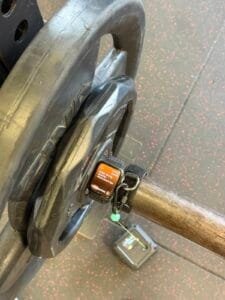
L'app Spleeft raggiunge questo obiettivo. Tieni traccia della velocità su ogni ripetizione di ogni serie. Invece di indovinare se sei nella zona giusta, Vedere I dati. Quando la velocità della prima ripetizione scende al di sotto del tuo obiettivo nelle serie successive, riduci il carico. Quando la perdita di velocità scende sotto 20%, sai di essere sottoallenato per quella serie. Quando supera 40%, sai di essere scivolato in un allenamento inutile.
Questa precisione si traduce, nel corso di settimane e mesi, in risultati notevolmente superiori rispetto ai tradizionali approcci basati sul conteggio delle ripetizioni.⁷
Sovraccarico progressivo: come la tua routine di allenamento migliore favorisce una crescita continua
Un ben progettato programma di allenamento della forza non è statico. Si evolve. Il sovraccarico progressivo, ovvero l'aumento graduale delle richieste di allenamento, è imprescindibile per una crescita muscolare continua.⁹
Metodi di sovraccarico progressivo:
Aumentare il peso: Aggiungi 5 libbre (2,5 per lato) agli esercizi con bilanciere
Aumentare le ripetizioni: Aggiungi 1-2 ripetizioni per serie mantenendo la velocità
Aumentare i set: Aggiungi un set corrispondente al volume per esercizio
Diminuire i periodi di riposo: Ridurre il recupero tra le serie di 15-30 secondi
Migliorare la gamma di movimento: Aumenta la profondità o la ROM completa
Migliorare la forma: Una tecnica migliore recluta più fibre muscolari
La ricerca dimostra che il sovraccarico progressivo tramite aumento del carico e delle ripetizioni produce un'ipertrofia equivalente quando il volume è uguale.⁹ Questo è importante perché ti dà flessibilità. Alcune settimane, aggiungi peso. Altre settimane, aggiungi ripetizioni. Lo stimolo si accumula in entrambi i casi.
Un semplice protocollo di sovraccarico progressivo di 12 settimane:
Settimane 1-4: Stabilisci una linea di base. Concentrati sulla forma perfetta. Aggiungi peso ogni volta che raggiungi il limite superiore del tuo intervallo di ripetizioni obiettivo (ad esempio, 8 ripetizioni) per 3 serie consecutive.
Settimane 5-8: Aumenta il volume. Aggiungi una serie per esercizio o aumenta le ripetizioni di 1-2 per serie.
Settimane 9-12: Focus sull'intensità. Aumentare i pesi di 5-10% dalla settimana 1. Ridurre le ripetizioni se necessario, quindi aumentare di nuovo.
FAQ: domande chiave sui tuoi allenamenti e programmi
1. Per quanto tempo dovrei seguire un programma di allenamento prima di cambiarlo?
Almeno 8 settimane. Il sistema nervoso ha bisogno di tempo per adattarsi agli schemi di movimento e alle richieste di carico. La ricerca dimostra che i guadagni accelerano tra la quarta e l'ottava settimana, man mano che il corpo diventa efficiente allo stimolo. Cambiare ogni 2-3 settimane impedisce l'adattamento. Detto questo, variare l'allenamento (esercizi diversi che coinvolgono gli stessi gruppi muscolari) ogni 4-6 settimane previene la noia e coinvolge i muscoli da angolazioni diverse.
2. Posso seguire questo programma di allenamento della forza anche se sono un principiante?
Sì, ma semplificalo. Inizia con la versione full-body da 3 giorni. Riduci il volume a 3 serie per esercizio. Padroneggia la tecnica prima di aggiungere complessità. I principianti ottengono risultati eccezionali anche con una struttura modesta, perché partono da zero.
3. Se posso allenarmi solo 3 giorni a settimana, qual è la struttura migliore per la mia routine di allenamento?
Le sessioni split per tutto il corpo funzionano alla grande. Coinvolgi tutti i gruppi muscolari per tutti e tre i giorni con esercizi composti (squat, stacchi da terra, distensioni su panca, rematore). Mantieni le sessioni di 45-60 minuti. Anche con un volume totale inferiore rispetto alle sessioni split da 5 giorni, l'alta frequenza compensa e produce una solida ipertrofia nei modelli da 3 giorni.¹⁰
4. Dovrei allenarmi fino al cedimento assoluto in ogni serie?
No. La ricerca dimostra che fermarsi a 1-2 ripetizioni dal cedimento produce un'ipertrofia equivalente all'allenamento fino al cedimento, creando al contempo meno affaticamento e rischio di infortuni.¹¹ Allenati per vicino fallimento (RPE 8-9/10), non fallimento assoluto.
5. Come faccio a sapere se sto mangiando abbastanza per supportare la crescita muscolare derivante da questo programma di esercizi di forza?
Dovresti aumentare di peso in media di 0,25-0,5 kg a settimana. Se il peso si stabilizza dopo 2-3 settimane, aumenta le calorie di 200-300 al giorno. Se aumenti più velocemente di 0,5 kg a settimana, stai accumulando grasso in eccesso. Regola di conseguenza.

Iván de Lucas Rogero
Prestazioni fisiche MSC e CEO SpleeftApp
Dedicato al miglioramento delle prestazioni atletiche e dell'allenamento ciclistico, unendo scienza e tecnologia per ottenere risultati.
Riferimenti
Schoenfeld BJ. I meccanismi dell'ipertrofia muscolare e la loro applicazione all'allenamento di resistenza. J Strength Cond Res. 2010;24(10):2857–2872.
Schoenfeld BJ, Ogborn D, Krieger JW. Relazioni dose-risposta tra volume di allenamento di resistenza e massa muscolare. Med Sport. 2017;47(5):955–963.
Schoenfeld BJ, Contreras B, Tiryaki-Sonmez G, et al. Differenze regionali nell'attivazione muscolare durante l'esercizio con la macchina per i muscoli posteriori della coscia: un'analisi elettromiografica. J Sports Med Phys Fitness. 2016;56(4):428–432.
Schoenfeld BJ. Il danno muscolare indotto dall'esercizio fisico gioca un ruolo nell'ipertrofia del muscolo scheletrico? J Strength Cond Res. 2012;26(5):1441–1453.
Schoenfeld BJ, Ratamess NA, Peterson MD, Alvar BA, Safety R. Consenso sul volume, l'intensità e la frequenza dell'allenamento per l'ipertrofia muscolare. Med Sport. 2016;46(11):1689–1697.
Lasevicius T, Schoenfeld BJ, Silva-Batista A, et al. L'insuccesso muscolare favorisce una maggiore ipertrofia muscolare nell'allenamento di resistenza a basso carico, ma non in quello ad alto carico. J Strength Cond Res. 2016;30(11):3128–3135.
Pareja-Blanco F, Rodríguez-Rosell D, Sánchez-Medina L, et al. Effetti della perdita di velocità durante l'allenamento di resistenza sulle prestazioni atletiche, sull'aumento della forza e sugli adattamenti muscolari. Scand J Med Sci Sports. 2017;27(7):724–735.
Schoenfeld BJ, Contreras B, Tiryaki-Sonmez G, et al. Differenze regionali nell'ipertrofia tra distensioni su panca con bilanciere e croci con manubri: una visione meccanicistica e un'applicazione. Forza Cond J. 2016;38(5):51–57.
Schoenfeld BJ, Pope ZK, Benik FM, et al. Periodi di riposo più lunghi favoriscono una maggiore forza muscolare e un aumento dell'ipertrofia durante l'allenamento di resistenza. J Sports Sci Med. 2016;15(3):540–547.
Iversen VM, Norum M, Schoenfeld BJ, Fimland MS. Nessuna differenza significativa nell'ipertrofia muscolare dopo un allenamento di resistenza a volume uguale eseguito 1 o 3 giorni alla settimana. J Strength Cond Res. 2021;35(12):3273–3278.
Sampson JA, Groeller H. Lo stimolo doloroso è sufficiente per avviare la sintesi proteica muscolare e la crescita muscolare? Med Sport. 2016;46(8):1149–1155.
Applicazione Spleeft. Monitoraggio della velocità in tempo reale per l'ottimizzazione dell'ipertrofia. Disponibile su spleeft.app. Monitora la velocità del bilanciere in ogni serie e ripetizione, monitorando la perdita di velocità ottimale di 30-40% per serie per garantire uno stimolo ipertrofico preciso senza eccessivo affaticamento da sfregamento.