真正有效的速度训练背后的科学原理

10 - The Science Behind Real Speed Training That Actually Works

Here’s what most athletes get wrong about speed training: they think it’s just about running faster or jumping higher. They show up to the track, do some shuttle runs, maybe throw in some drills, and call it a day. But if you dig into the actual science of how human bodies develop speed, you’ll realize that this hit-or-miss approach is costing you weeks—sometimes months—of wasted effort.

The truth is that how to enhance speed involves understanding a few non-negotiable principles. And once you understand them, training speed becomes less like guessing and more like engineering. You stop wondering whether your drills to improve speed are actually working. You start measuring them.

Let’s talk about what actually moves the needle when you want to train for speed, and more importantly, why traditional approaches leave so many athletes plateaued and frustrated.

立即下载适用于 iOS、Android 和 Apple Watch 的 SPLEEFT 应用程序!

What Speed Actually Is (And Why Your Current Training Might Miss It)

Before we get into speed workout programming, let’s define what we’re chasing. Speed—or more accurately, sprint velocity—isn’t a single quality. It’s a layered, multifactorial output that depends on force production, the rate at which you produce that force, movement mechanics, and nervous system coordination.¹

Think of it like this: a car might have a powerful engine (force production), but if the transmission can’t engage quickly enough (rate of force development), or if the suspension is stiff and unresponsive (neuromuscular coordination), that power gets wasted. The fastest sprinters aren’t just the strongest. They’re the ones who combine strength with the ability to express that strength quickly

This distinction matters because most traditional fitness training for speed focuses on one component—usually raw strength—and assumes speed will follow. It does, sometimes. But not optimally. Not nearly as efficiently as it could.

Research comparing different approaches shows that when athletes train with explicit focus on movement velocity—both in barbell exercises and in sport-specific movements—they develop better rate of force development (RFD) than athletes following standard percentage-based programs.³ That means faster speed improvements in real competitive contexts.

This is exactly where 基于速度的训练 fundamentally changes how you approach speed development. Instead of guessing whether your training is hitting the right intensity zone, you measure it. You know whether you’re training for acceleration, for top-end velocity, or for reactive strength. And that precision compounds into results.

4

The Three Pillars of Real Speed Development

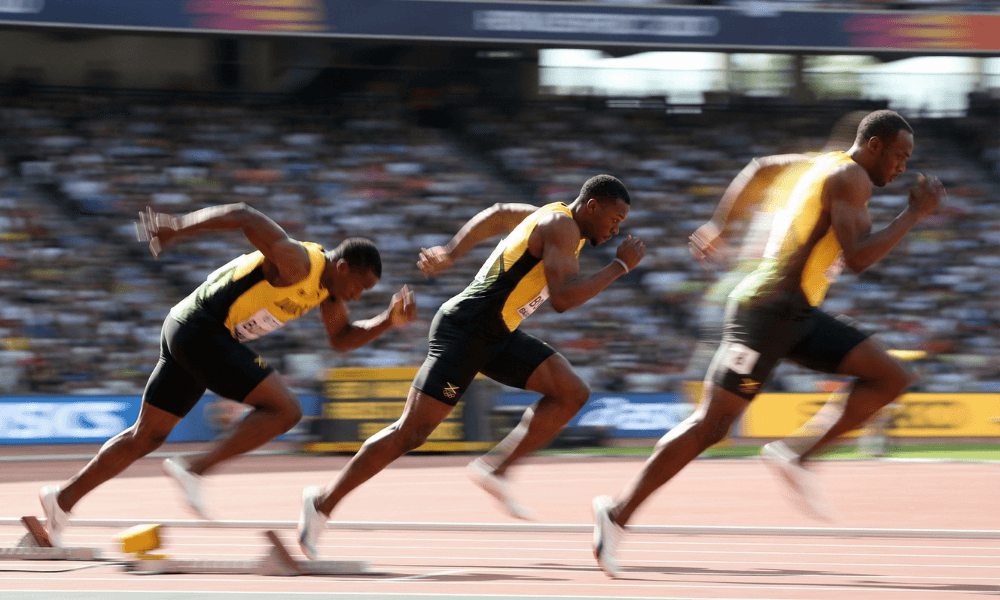
There are three distinct phases in sprint acceleration, and most athletes train them all the same way. That’s a critical mistake.⁴

1. Acceleration Phase (0–5 meters): Building Initial Explosive Force

In the first few meters of a sprint, your goal is to generate maximum horizontal force as quickly as possible. This phase is all about force production and the nervous system’s ability to recruit muscle fibers rapidly.⁴

有效的 drills to improve speed during this phase emphasize heavy loads moved explosively. Box squats, hang power cleans, and resisted sled pushes all create the mechanical conditions necessary for acceleration development.⁵ The velocity here is typically lower (more force-dominant), but the intent is maximum.

Research shows that resisted sprint training—wearing a harness or pushing a weighted sled—specifically targets acceleration mechanics and produces measurable improvements in 10-meter sprint times compared to unresisted sprinting alone.⁵

2. Maximum Velocity Phase (20+ meters): Moving Fast Against Load

Once you’ve accelerated, the challenge shifts. Now you need to move light (or no) load at high velocity. This is pure speed territory. Your nervous system is firing at maximum frequency, your movement economy is critical, and the stretch-shortening cycle (elastic energy) becomes the limiting factor.

For this phase, speed training means light resistance, high velocity, and focus on mechanical efficiency. Overspeed training (assisted sprints, downhill running) and plyometric exercises fall here.² Countermovement jumps, depth jumps, and reactive bounding drills all train this high-velocity, low-load context.

3. Reactive Speed: Combining Force and Velocity

This is the often-overlooked third piece. Reactive strength—the ability to rapidly change direction or decelerate and re-accelerate—shows up in nearly every sport. Basketball cuts, rugby agility, soccer directional changes. These movements demand force production  high velocity  neuromuscular control all simultaneously.¹

Training reactive speed requires sport-specific drills that stress the stretch-shortening cycle under game-like conditions. Multi-directional plyometrics, agility ladder work, and small-sided sports drills all fall here.

5

The Core Training Methods: What the Research Actually Shows

If you’ve read anything about speed improvement, you’ve probably encountered contradictory information. One source says high-intensity interval training (HIIT). Another says plyometrics. Another swears by Olympic lifting. Here’s what the meta-analyses actually show:

Heavy Resistance Training for Strength Foundation

Traditional strength work (barbell squats, deadlifts, bench presses) remains foundational. Athletes who combine appropriate strength training with speed workout programming outperform those doing speed work in isolation.³

But here’s the critical detail: strength gains alone are insufficient. Strength needs to be transferred to speed contexts. An athlete who squats 500 pounds but moves it slowly won’t sprint faster than someone who squats 400 pounds but accelerates it explosively.

Plyometric Training: The Highest ROI for Speed Development

Plyometric exercises—depth jumps, box jumps, reactive bounds—produce reliable improvements in both jump height and sprint velocity.⁶ The mechanism is clear: these movements train the nervous system to activate fast-twitch fibers rapidly and optimize elastic energy storage and release.

Research shows plyometric interventions produce effect sizes of 0.60–0.85 for jump performance when implemented consistently.⁶ That’s substantial. More importantly, jump improvements correlate strongly with sprint acceleration improvements, suggesting transfer is real and measurable.

Sprint-Specific Resisted Training

Running sprints against resistance (harnesses, sled pushes, uphill running) specifically improves acceleration phase performance.⁵ Meta-analytic evidence shows resisted sprint training produces significant decreases in 10-meter times but minimal effect on 20-meter times or maximum velocity.⁵ This tells you something important: resisted training targets force production, not velocity.

High-Intensity Interval Training (HIIT): Limited Direct Effect on Speed

Here’s where conventional wisdom breaks down. HIIT improves aerobic capacity and repeat-sprint ability, but it’s a poor direct tool for how to training speed in the velocity sense.⁷ Athletes doing primarily HIIT may get fitter but don’t necessarily get faster. The distinction matters in sport context—a soccer player needs repeat-sprint capacity  top-end velocity, but they’re not the same quality.

The takeaway: combine HIIT with explosive work, don’t use it as a speed training substitute.

Here’s where most speed training programs fail athletes: they prescribe activities without verifying that those activities produce the intended stimulus.

When a coach says “do 6 box jumps,” is the athlete actually jumping explosively? Or are they just going through the motion? When a sprint workout says “repeat 200-meter sprints,” are they actually training maximum velocity, or are they in a low-power endurance context?

This is exactly why 基于速度的训练 has revolutionized speed development. Instead of hoping the stimulus matches the prescription, you measure it.¹

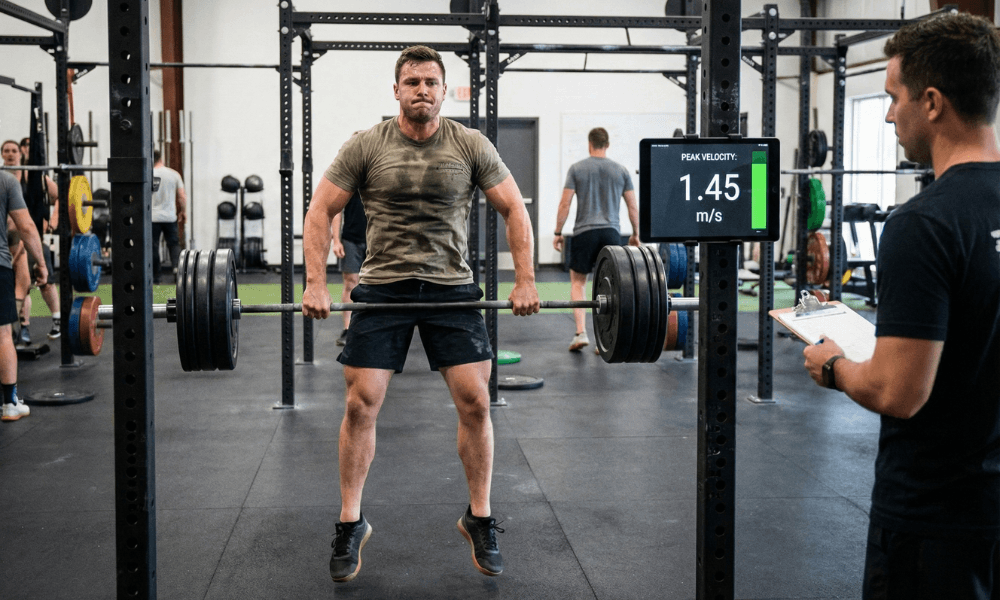
For barbell exercises and gym-based training, measuring barbell velocity gives direct feedback on whether you’re in the right intensity zone. A jump squat performed at 1.2 m/s hits a different neuromuscular adaptation than one at 0.6 m/s, even with the same load.¹

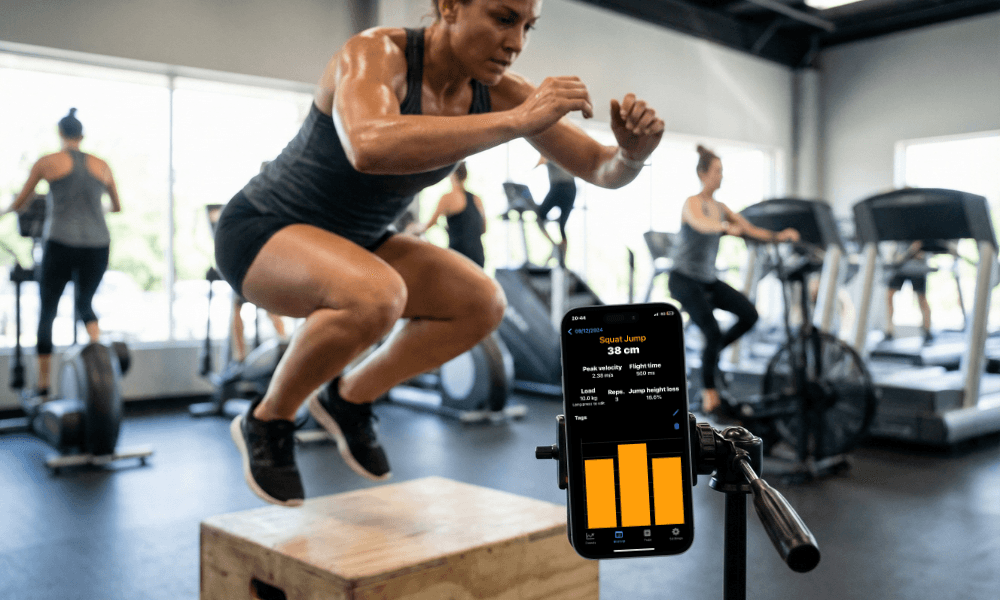
For jump training, measuring jump height (which correlates perfectly with takeoff velocity) tells you whether each rep is explosive or fatigued. Spleeft App’s jump measurement capability makes this objective. You’re not estimating whether your athlete jumped hard today. You’re measuring whether they jumped 38 inches or 35 inches—and you can see trends over weeks.

Speed Training Programs: Theory Meets Practice

Here’s what an evidence-based speed workout mesocycle looks like when you integrate all three training phases:

Training PhasePrimary GoalMethodsDuration/WeekExample Drills
Acceleration DevelopmentForce production, RFDHeavy resistance training, resisted sprints, power cleans2x/weekBox squats, sled pushes, harness sprints
Maximum VelocityMovement efficiency, elastic recoilPlyometrics, overspeed drills, light reactive work2x/weekDepth jumps, bounding, downhill running
Reactive SpeedNeuromuscular integrationSport-specific agility, directional changes, reactive movements2-3x/weekCutting drills, agility ladder, small-sided games
General ConditioningAerobic capacity, repeat-sprint abilityHIIT, circuit work (lower intensity)1-2x/week30–40m repeated sprints with full recovery

A critical point: these aren’t isolated. A strong acceleration phase builds the force foundation. Maximum velocity training ensures that force transfers to actual speed. Reactive speed training ensures that speed applies in chaotic sport contexts. And general conditioning ensures athletes can sustain their development across repeated efforts.

Jump Training as Speed Development: The Often-Missed Connection

Here’s something coaches frequently overlook: jump training is speed training. The mechanisms are identical.

Vertical jump performance depends on peak power output (force × velocity).⁶ Athletes who improve jump height almost universally improve sprint acceleration.⁸ This isn’t coincidental—both depend on rate of force development, elastic energy utilization, and fast-twitch fiber recruitment.

有效的 drills to improve speed in the jump context include:

  • Depth jumps: Drop from a box, minimize ground contact, explode upward. Develops reactive strength and teaches rapid force production.⁶

  • Concentric-only jumps: Jump squat with weight, focusing on explosive upward movement. High velocity, moderate load—perfect for power development.

  • Reactive bounds: Single-leg or double-leg bounding with minimal ground contact. Trains elastic recoil and stretch-shortening cycle.

Tracking jump metrics over time reveals whether your jumping program is actually working. Spleeft App measures jump height precisely, allowing you to see week-to-week progress. This objective feedback—seeing your countermovement jump improve from 28 inches to 31 inches—drives adaptation and motivation in ways that subjective “it felt explosive today” never will.¹

15

Barbell Velocity and Speed Transfer: Why Heavy Doesn’t Mean Slow

One persistent myth: lifting heavy makes you slow. This is false when you understand the force-velocity relationship properly.

Research shows that athletes who perform resistance exercises explosively—emphasizing bar acceleration even with heavy loads—maintain or even improve sprint velocity while building strength.³ The mechanism: explosive intent recruits more muscle fibers and teaches the nervous system to produce force rapidly.

Practical example: An athlete performing box squats at 80% 1RM but moving the bar at 0.8 m/s develops better rate of force development than an athlete grinding the same weight at 0.4 m/s. The velocity tells you about the training stimulus, not just the load.

This is why fitness training for speed should integrate barbell velocity measurement. Whether you’re using Spleeft App or another VBT device, the feedback ensures your “strength” training actually transfers to athletic speed.¹

常见问题

1. How long does it take to see real speed improvements?

This depends on baseline and specificity. Athletes starting from a sedentary baseline see sprint improvements within 3–4 weeks. Trained athletes see measurable acceleration improvements (0.1–0.2 second faster 10m time) within 6–8 weeks of consistent speed training if programming is specific and measured. Maximum velocity gains typically take 10–12 weeks of targeted training.

2. Can I do speed training every day?

Not if your goal is actual improvement. Speed work—particularly plyometrics and acceleration drills—requires high neuromuscular demand and therefore needs recovery. Most evidence supports 2–3 dedicated speed sessions per week with at least one full recovery day between intense sessions. More frequent sessions cause fatigue and reduce quality.

3. Should female athletes train speed differently than male athletes?

The physiological principles are identical. However, female athletes often respond well to higher training frequencies (3–4x weekly speed work) with lower volume per session. Individual variation matters far more than sex. Use objective measurement—velocity data from barbell work and jump height from plyos—to individualize rather than relying on assumptions.

4. How does age affect speed training response?

Younger athletes (14–25) show rapid improvements because their nervous system is still developing fine-tuned movement coordination. Adult athletes (25–40) continue improving through rate of force development work but see slower progression in maximum velocity. Masters athletes (40+) maintain and modestly improve speed through consistent plyometric and reactive work, though absolute gains are smaller.

5. Can I improve speed without plyometrics or jumping?

Partially. Heavy resistance training with explosive intent, combined with sport-specific directional work, builds speed. However, research consistently shows that adding plyometrics accelerates speed development. Plyometrics aren’t optional for optimal speed training—they’re foundational for targeting the elastic and reactive components of speed.

The Role of Technology: Making Speed Training Objective

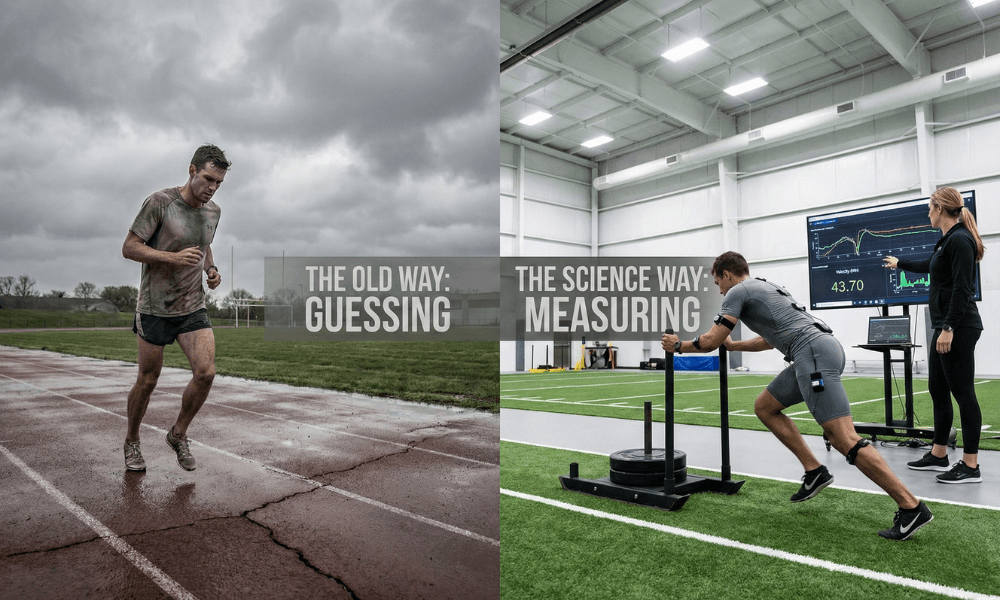
Traditional speed training relied on stopwatches and subjective assessment. “He looks faster.” “That sprint felt good.” This approach leaves massive blind spots.

Modern how to enhance speed training integrates measurement. Spleeft App measures jump height precisely through your phone’s accelerometer, correlating with velocity-based outcomes. For barbell movements, measuring bar velocity shows whether you’re truly training explosively or just moving weight.

The data transforms coaching. Instead of wondering whether your training speed regimen is working, you see it: jump height trending upward, barbell velocity holding steady or increasing at same loads, sprint times dropping. Objective measurement drives better programming decisions and athlete accountability.

伊万-德卢卡斯-罗热罗

伊万·德·卢卡斯·罗杰罗

MSC 身体表现 & SpleeftApp 首席执行官

致力于提高运动表现和骑行训练,结合科学技术来推动成果。

参考

  1. García-Ramos A, Štirn I. Countermovement Jump Height is Related to Antagonist Muscle Activity and Knee Joint Mechanics. J Strength Cond Res. 2016;30(4):1063–1071.

  2. Haugen TA, Tønnessen E, Seiler S. The Training and Development of Elite Sprint Performance: An Integration of Scientific and Best Practice Literature. J Sports Med. 2015;5:35–44.

  3. Weakley J、Mann B、Banyard H 等人。. 基于速度的训练:从理论到应用。. Strength Cond J. 2021;43(2):31–49。.

  4. Nagahara R, Matsubayashi T, Matsuo A, Zushi K. Kinematics of transition during human accelerated sprint: A comparison of zich acceleration phase. J Sports Sci. 2014;32(6):548–556.

  5. Jiménez-Reyes P, García-Ramos A, Pareja-Blanco F, Morcillo JA. Acute mechanical and physiological responses to resisted sprint training on an overground sprint ergometer. J Strength Cond Res. 2016;30(9):2425–2435.

  6. Bobbert MF, Haan A, Sargeant AJ. Factors in determining the maximal power output of human muscles. Exp Brain Res. 1996;141(1):159–172.

  7. Buchheit M, Laursen PB. High-Intensity Interval Training, Solutions to the Programming Puzzle: Part I, Physiological Determinism. Sports Med. 2013;43(5):313–338.

  8. Seiber K, Wang SS, Quindel J, et al. Vertical jump height as a predictor of sprint performance: The correlation analysis. Int J Kinesiol Sports Sci. 2018;6(2):22–31.

  9. Spleeft 应用程序。 Jump Height Measurement and Velocity Tracking Features. Scientific validation shows correlation with force plate measurements. Available at spleeft.app.

分享此帖:

发表评论

您的电子邮箱地址不会被公开。 必填项已用 * 标注

您也可能感兴趣

10 300x180 - 真正有效的速度训练背后的科学原理
一般的

真正有效的速度训练背后的科学原理

大多数运动员对速度训练的误解在于:他们认为速度训练就是跑得更快或跳得更高。他们来到跑道上,然后……

11 300x180 - 肥大与增生:了解肌肉生长机制
一般的

肥大与增生:了解肌肉生长机制

你可能已经听过无数遍了:“举重、摄入蛋白质、增肌。” 但大多数教练从未提及的是——真正促成肌肉增长的生物学机制。

zh_CN