You walk into a powerlifting meet and immediately notice two worlds colliding. One side has lifters in singlets, belts, and sleeves—raw powerlifting warriors grinding out every plate through sheer muscular force. The other side sports multilayer suits that look like body armor, knee wraps thick as garden hoses, and bench shirts that make grown men look like the Michelin Man.
What does raw mean in powerlifting? Simple: no supportive gear beyond wrist wraps, knee sleeves, elbow sleeves, and a belt. Single ply powerlifting allows one layer of equipment per lift. Full-equipped is everything that goes—multiply suits that can add 100-200+ pounds to your total.
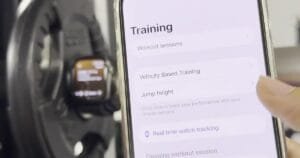
But here’s the real question: how does Spleeft App help you dominate both worlds? Whether you’re building raw powerlifting PRs through perfect technique or mastering single-ply powerlifting gear timing, velocity-based training gives you the edge no gear can replicate.
DOWNLOAD SPLEEFT APP NOW FOR iOS, ANDROID AND APPLE WATCH!
The Fundamental Difference: Muscle vs System
Raw powerlifting measures one thing: your muscular capacity. Every rep demands absolute control from start to finish. Your 700-pound squat at 0.22 m/s mean velocity lives or dies by bracing, bar path, and depth precision.¹
Equipped powerlifting measures your body + gear system. That same lifter in a multi-ply suit might squat 900 pounds—but at 0.18 m/s with explosive rebound phases gear provides.² Success becomes timing the suit’s elastic storage/release perfectly.
Training implication: Raw builds the foundation. Equipped builds gear-specific skills on top of that foundation. Attempting equipped without raw strength is like building a skyscraper on sand.
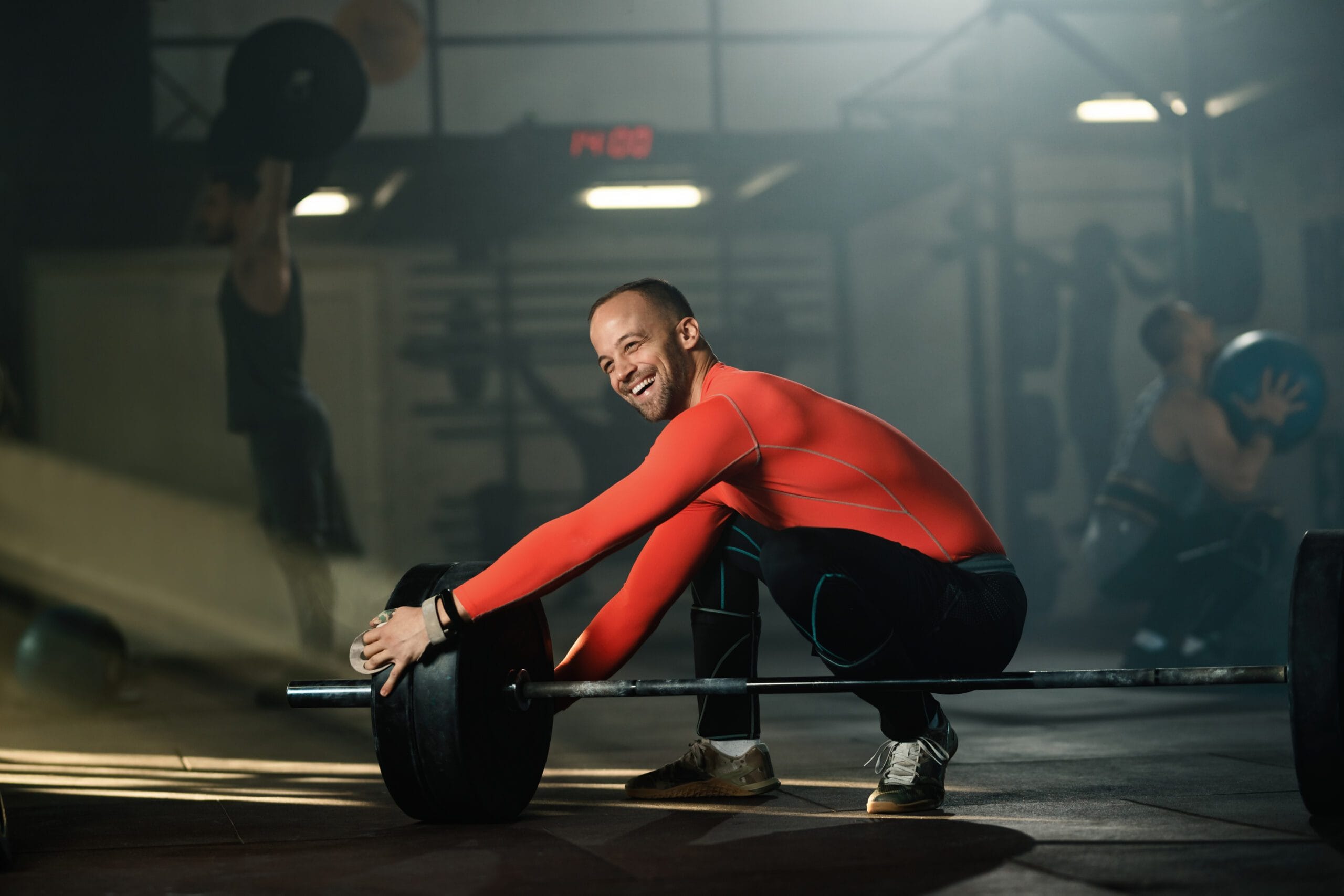
Is Squatting With a Belt Raw? The Official Answer
Is squatting with a belt raw sparks endless gym debates. Official answer from IPF/USAPL raw federations: YES. Belts provide intra-abdominal pressure stability, not elastic rebound.³
Real-world impact:
Belt alone: +5-15% squat via better bracing⁴
Single-ply suit: +25-50% via controlled elastic energy
Multi-ply suit: +60-150% via massive stored potential
Single ply powerlifting clarifies this: one layer per lift maximum. Single-ply suit OR single-ply bench shirt, never combined. Knee sleeves (compression/warmth) and wrist wraps (joint stability) allowed universally.
Spleeft application: Track velocity with/without belt to quantify bracing efficiency gains. Belted squats should show 3-8% higher velocity at same load vs beltless.⁵
Training Demands: Precision vs Power Output
Raw powerlifting lives at muscular fatigue’s edge. Your competition squat demands perfect positioning through 0.20-0.40 m/s velocity range. Technique breakdown kills attempts before muscular failure.
Equipped training demands explosive concentric phases. Suits store eccentric energy, demanding precise timing for release. That 850-pound suit squat might average 0.16 m/s total—but 0.45 m/s during rebound phase.
Spleeft shines in both:
Raw monitoring:
Target zones: 0.20-0.45 m/s competition tempo
Velocity loss cap: 18-22% per set
Daily readiness: Compare warm-up velocities to baseline
Equipped monitoring:
Suit squats: 0.15-0.28 m/s (timing window)
Bench shirt: 0.12-0.25 m/s press-out velocity
Gear fatigue: Stop at 12-15% velocity loss
Real advantage: Spleeft catches fatigue before technique fails, whether raw grinding or suit timing.
Programming Reality: Different Periodization Paths
Raw powerlifting follows classic linear progression:
12-week raw cycle example:
Weeks 1-4: Build volume (6x4 @ 75%, RPE 7)
Weeks 5-8: Accumulate intensity (5x3 @ 82%, RPE 8)
Weeks 9-11: Realize strength (4x2, 3x1 @ 88-94%)
Week 12: Test max
Spleeft integration: Velocity consistency across percentages reveals true readiness. Week 8’s “82%” moving at week 5’s 77% velocity = fatigue signal. Deload.
Equipped cycles follow gear accommodation:
12-week equipped squat:
Weeks 1-3: Suit introduction (70-80% raw max in gear)
Weeks 4-7: Suit overload (85-95% raw max)
Weeks 8-11: Meet simulation (attempt weights)
Week 12: Competition
Spleeft value: Maps exact gear velocity signatures. Your 800# suit squat might match 650# raw velocity—knowing this prevents over/under-loading.
Load-Velocity Profiles: Raw vs Equipped Truth
Raw powerlifting produces smooth, linear load-velocity relationships:
Raw Squat Example:
90% 1RM: 0.28 m/s
75%: 0.52 m/s
60%: 0.78 m/s
Equipped profiles show discontinuities where gear engagement creates velocity jumps:
Suit Squat Reality:
Raw 90%: 0.28 m/s
Suit 70% raw: 0.32 m/s (suit tension)
Suit 90% raw: 0.26 m/s (optimal rebound)
Suit 110% raw: 0.19 m/s (max effort)
Spleeft automatically builds these profiles, letting raw lifters predict 1RMs accurately (±3-5%) and equipped lifters dial in gear sweet spots.
Training zone comparison:
WordPress-friendly table format:
Raw Powerlifting Zones:
Heavy base: 0.20-0.40 m/s
Competition tempo: 0.25-0.45 m/s
Technique work: 0.50-0.70 m/s
Equipped Powerlifting Zones:
Suit learning: 0.18-0.35 m/s
Rebound timing: 0.22-0.40 m/s
Max equipped: 0.12-0.25 m/s
Physique Development: Raw Builds Function, Equipped Builds Specialization
Raw powerlifting creates balanced, athletic physiques. Full range control without gear forces proportional development across stabilizers, prime movers, grip.
Single ply powerlifting begins specialization. Suits favor hip-dominant patterns, slightly shifting quad/hamstring ratios.
Full-equipped creates specialized morphology:
Massive pec shelves from shirt mechanics
Thickened abs from constant belt/suit pressure
Hip-dominant lower bodies from suit leverage
Injury patterns differ dramatically:
Raw risks: Technique failure under fatigue (low back, knees)
Equipped risks: Acute gear loading (shoulders, ribs)
Common: Grip failure, bicep tears
Spleeft prevents both via velocity decay monitoring—raw lifters avoid grind sets, equipped lifters perfect timing windows.
Competition Reality: Different Games, Same Math
Raw powerlifting rewards preparation consistency. Your opener should mirror training velocity if recovery matched expectation.
Equipped competition rewards gear mastery. Veterans who know their suit’s exact “pop point,” bench shirt press-out arc, and deadlift tension sequence outlift stronger-but-less-experienced lifters.
Spleeft meet prep protocol:
3 weeks out: Full gear velocity profiling
2 weeks out: Competition opener velocity matching
1 week out: Warm-up velocity checkpoints
Meet day: Real-time readiness feedback
Weekly Training Template: Raw-to-Equipped Hybrid
Monday: Raw Squat/Bench Volume
Squat: 6x4 @ 0.45-0.55 m/s (78-82%)
Bench: 6x4 @ 0.42-0.52 m/s
Spleeft: 20% velocity loss maximum per set
Wednesday: Gear Introduction
Single-ply squat: 5x3 @ 0.25-0.32 m/s
Bench shirt work: 4x2 press-out velocity target
Spleeft: Map gear velocity signatures
Friday: Raw Deadlift + Accessories
Deadlift: 5x3 @ 0.28-0.38 m/s
Spleeft: Cross-day fatigue monitoring
Sunday: Gear-Specific Max
Full meet simulation in competition gear
Spleeft: Training-to-meet velocity transfer validation
FAQs: The Unasked Questions
1. Can raw lifters occasionally train equipped without ruining technique?
Occasional exposure (1x/month max) teaches gear feel without overwriting raw patterns. Spleeft verifies technique velocity normalization within 7-10 days post-exposure.^9
2. Do different raw federations interpret “raw” identically?
Mostly yes, but subtle differences exist. IPF raw allows single-ply wrist wraps; some US feds ban elbow sleeves. Always check rulebook.
3. Should equipped lifters maintain raw maxes?
Absolutely. Gear multiplies existing strength. Raw base prevents injury when gear fails. Train raw 70% of sessions minimum.
4. What’s deadlift wrap protocol in single ply?
Figure-8 straps allowed. Figuring 8 configuration provides controlled rebound vs traditional straps. Spleeft tracks lock-off velocity differences.^9
5. Do women benefit equally from both disciplines?
Yes, but gear scaling favors heavier classes. Lighter women often maximize raw potential. Spleeft equalizes via precise load prescription regardless of bodyweight.

Iván de Lucas Rogero
MSC Physical Performance & CEO SpleeftApp
Dedicated to improving athletic performance and cycling training, combining science and technology to drive results.
References
IPF Technical and Competition Rules – Raw Division Specifications
Elastic Energy Storage in Multi-Ply Powerlifting Equipment (JSCR 2019)
Intra-Abdominal Pressure and Belt Efficacy Meta-Analysis (Sports Med 2021)
Fatigue-Induced Technique Decay in Maximal Lifting (JSCR 2020)
Load-Velocity Profile Validity Across Training Status (Sports Biomech 2022)
Single-Ply Equipment Biomechanical Analysis
Equipped Powerlifting Injury Epidemiology Review (JSCR 2018)
Velocity-Based Autoregulation in Periodized Training
Spleeft App: Dual Raw/Equipped Training Optimization Protocols
Final Truth
Raw powerlifting reveals your muscular truth. Single ply powerlifting teaches controlled enhancement. Full-equipped masters human + physics synergy.
Spleeft App serves all three. Raw lifters gain fatigue precision. Equipped lifters master timing windows. Both receive daily objective feedback turning subjective “feeling good” into measurable reality.
Gear expresses preference. Velocity measurement expresses truth. Choose your expression. Always measure the truth.